
Interest in medical weight management has surged as more people search online, asking whether GLP-1 patches work and whether these products truly support sustainable weight loss.
As prescription GLP 1 medications gain attention for their metabolic benefits, patch-based alternatives are increasingly marketed as a convenient solution. But convenience does not always equal effectiveness.
To properly evaluate whether glp 1 patches work, we must examine the biology of GLP 1 therapy, the science behind approved medications, and the realities of transdermal absorption.
Understanding these distinctions is essential for anyone serious about long-term metabolic health.
Understanding GLP-1 and Its Role in Metabolism
GLP 1, or glucagon-like peptide-1, is a naturally occurring hormone released in the gut after food intake. According to the National Institute of Diabetes and Digestive and Kidney Diseases, GLP-1 helps regulate blood sugar by stimulating insulin release and reducing glucagon secretion.
Research summarized by the National Institutes of Health explains that GLP-1 receptor activation also slows gastric emptying and enhances satiety signaling in the brain. This combination reduces hunger and stabilizes blood sugar levels.
The Cleveland Clinic highlights that GLP-1 receptor agonists are widely used for both diabetes management and chronic weight loss because of their appetite-suppressing effects.
More people are starting GLP-1 patches or prescription medications and experiencing changes in their energy, appetite, mobility, and overall health. As interest grows, so does the question do glp 1 patches work as effectively as injectable therapy.
How Prescription GLP-1 Medications Work
FDA-approved GLP-1 medications such as semaglutide are injectable therapies supported by extensive clinical trials. The U.S. Food and Drug Administration confirms that these medications demonstrated significant weight reduction when combined with lifestyle intervention.
GLP-1 medications are peptide-based compounds. Because peptides are large molecules, they require injection to enter the bloodstream intact. This allows them to bind directly to GLP-1 receptors and produce measurable metabolic effects.
Harvard Health Publishing emphasizes the importance of physician supervision, proper dose titration, and safety monitoring.
Key clinical outcomes include:
- Reduced appetite and food cravings
- Improved insulin sensitivity
- Slower gastric emptying
- Clinically significant fat loss
- Improved cardiometabolic markers
When patients compare options and ask whether GLP-1 patches work the same way, it is critical to understand these pharmacological fundamentals. It is critical to understand these pharmacological fundamentals.
What many people overlook is that even the most effective GLP-1 therapy can be quietly undermined by unmanaged stress.
Chronic stress elevates cortisol, one of the body’s most powerful fat-storage hormones, which preferentially drives visceral fat accumulation around the abdomen.
High cortisol also impairs insulin sensitivity and disrupts blood sugar regulation, working directly against the mechanisms that make GLP-1 medications effective.

What Are GLP-1 Patches and Do They Work?
GLP-1 patches are marketed as transdermal weight loss products designed to deliver GLP-1 or GLP-1-stimulating compounds through the skin. They are typically sold online without prescription requirements and promoted as needle-free alternatives.
To properly answer the question of whether GLP-1 patches work, we must examine the science of transdermal drug delivery.
Peptide hormones like GLP-1 are relatively large and structurally complex molecules. Research published in PubMed Central explains that transdermal absorption is generally effective only for small molecules. Large peptides struggle to penetrate the skin barrier without specialized delivery systems.
The American Academy of Dermatology describes the outermost skin layer as a highly protective barrier, limiting penetration of large molecules. This biological limitation is one of the primary reasons experts remain cautious when patients ask whether GLP-1 patches work compared to injectable GLP-1 therapy.
Comparing Delivery Methods
To better understand the differences, the following table outlines how injectable GLP 1 medications compare with transdermal patches.
| Direct GLP-1 receptor activation | Injectable GLP 1 Medications | Over the Counter GLP 1 Patches |
|---|---|---|
| FDA Approval | Yes for specific indications | Typically no |
| Clinical Trial Evidence | Large randomized trials | Limited or none |
| Bioavailability | High and measurable | Uncertain |
| Physician Oversight | Required | Usually not required |
| Dosing Precision | Standardized and monitored | Variable |
| Mechanism | Direct GLP 1 receptor activation | Often unclear or unsupported |
Unlike FDA-approved medications, most patches do not publish peer-reviewed outcome data. The Mayo Clinic emphasizes that effective weight loss medications require regulatory oversight and clinical validation.
At this time, limited published data confirm that GLP-1 patches work at therapeutic levels comparable to injectable formulations.
Scientific Considerations on Transdermal Peptide Delivery
Skin acts as a protective barrier. The outermost layer, the stratum corneum, restricts the penetration of large molecules.
According to dermatological research, only certain compounds can effectively pass through without advanced delivery systems.
Peptide-based drugs often require injection because:
- They degrade easily outside controlled environments
- They are too large to cross intact skin barriers
- Stable blood levels are difficult to maintain via topical application
The Johns Hopkins Medicine resource on obesity management reinforces that medically supervised pharmacotherapy is part of comprehensive care rather than a standalone quick fix.
Clinical Outcome Expectations
Clinical trials evaluating injectable GLP 1 receptor agonists show substantial weight loss over several months of consistent use.
| Injectable GLP-1 Therapy | Injectable GLP 1 Therapy | Patch Based Claims |
|---|---|---|
| Average Weight Reduction | Clinically significant in trials | Not validated |
| Appetite Suppression | Documented in studies | Anecdotal |
| Glycemic Control | Improved HbA1c in diabetes patients | Not established |
| Cardiometabolic Benefits | Demonstrated in select trials | Patch-Based Claims |
Pharmacologic obesity treatment is most effective when integrated into a structured, medically supervised program.
For individuals evaluating online claims, asking do glp 1 patches work requires more than marketing testimonials. It requires clinical data, regulatory approval, and medical oversight.
Why Fitness and Wellness Remain the Foundation
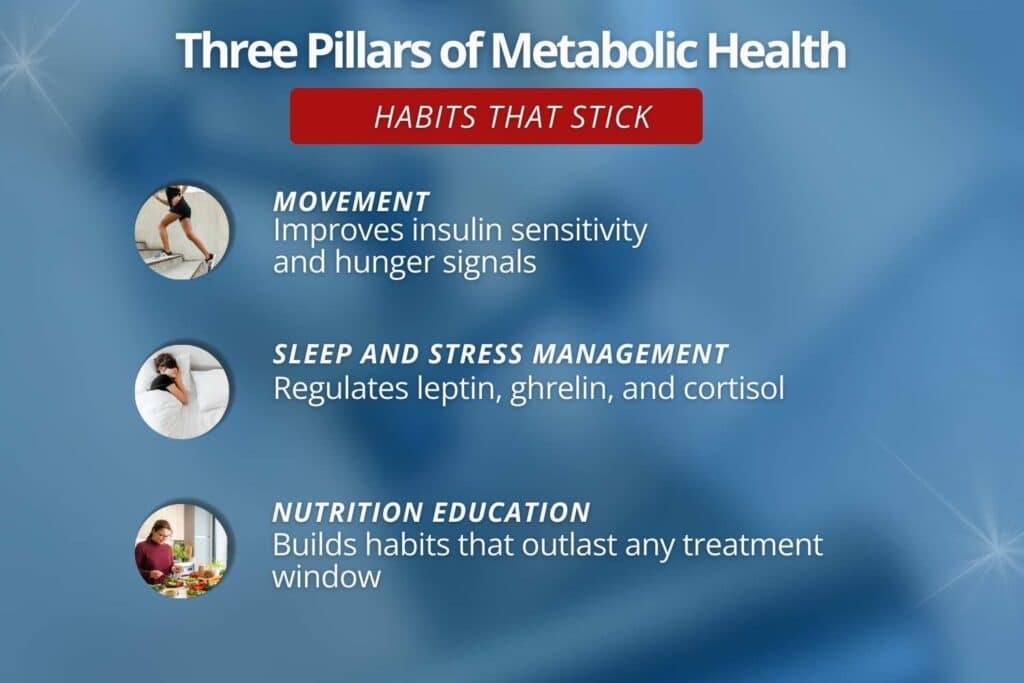
No medication, supplement, or patch changes the underlying reality that the human body is built to move. Physical activity is one of the most well-documented, mechanism-supported interventions for improving the same metabolic pathways that GLP-1 therapies target.
These are not side benefits. They are core physiological outcomes with decades of peer-reviewed support behind them.
Movement as Medicine
Regular movement enhances insulin sensitivity independently, reduces circulating glucose, and supports lean muscle retention.
It also triggers hormonal responses that promote satiety and mood stability, addressing many of the same appetite and blood sugar challenges that drive interest in GLP-1 therapy in the first place.
Exercise is not a companion to metabolic treatment. For many people, it is the treatment.
Sleep, Stress, and Hormonal Balance
The broader wellness picture matters just as much as physical activity. Sleep quality directly influences hunger-regulating hormones, including leptin and ghrelin, and poor sleep has been shown to blunt the effectiveness of both dietary and pharmacological weight management strategies.
Chronic stress elevates cortisol, which drives visceral fat accumulation and impairs the body’s ability to regulate blood sugar effectively. Managing stress through structured physical activity, consistent routines, and intentional recovery is not a soft lifestyle recommendation.
It is a clinical necessity for anyone pursuing long-term metabolic health.
Nutrition Education as a Long-Term Skill
Nutrition education is the third pillar that ties everything together.
Understanding how different foods affect blood sugar, how meal timing influences hormonal rhythms, and how to build balanced eating habits in a real-world environment gives individuals the practical tools to maintain progress beyond any treatment window.
Sustainable fat loss and metabolic improvement are built in daily habits, not delivered through a single product or therapy. Structured fitness programs, evidence-based nutrition coaching, and whole-person wellness support create the conditions where every other intervention works better and lasts longer.
Related Questions
What makes GLP 1 therapy effective for weight loss?
GLP-1 therapy supports appetite regulation, improves blood sugar balance, and helps patients achieve sustainable fat loss when combined with structured lifestyle guidance and medical supervision.
Is medical supervision important during GLP-1 treatment?
Clinical supervision is critical for safety, appropriate titration, and side effect management. Personalized care ensures that treatment aligns with an individual’s overall health profile and long-term goals.
Who is a candidate for GLP-1-based programs?
Candidates are evaluated based on health history, metabolic markers, and weight-related risk factors. A consultation helps determine whether GLP-1 therapy is appropriate within a broader health optimization plan.
How does structured physical activity support weight management goals?
Exercise improves insulin sensitivity, regulates hunger signals, and supports lean muscle retention. A structured fitness program turns movement into a sustainable habit that amplifies the results of any metabolic health strategy.
What role does whole-person wellness play in achieving lasting results?
Sleep, stress management, nutrition, and consistent movement all work together to support long-term metabolic health. Addressing each of these pillars creates the conditions where sustainable fat loss becomes achievable and maintainable.
Conclusion
While marketing claims suggest glp 1 patches work as a convenient shortcut, current scientific evidence continues to support physician-guided injectable GLP-1 therapy as the more reliable and biologically sound option.
Peptide-based medications require controlled delivery to reach therapeutic levels, and transdermal patches have absorption limitations. If you are evaluating whether glp 1 patches work or considering prescription GLP 1 therapy, professional medical guidance is the safest path forward.
To explore a structured, evidence-based approach to metabolic health and weight management, connect directly with Mile High Fitness and Wellness and schedule your consultation today.