
Wanting something sweet after a meal is not a willpower problem. It comes down to a mix of blood sugar patterns, brain chemistry, and learned habits your body has built over the years. At Mile High Fitness & Wellness, we hear this question often, and the honest answer is that most people experience it for more than one reason at the same time.
The good news is that once you understand what’s actually driving the craving, you can work with it instead of fighting it. This post covers the biology, the habits behind post-meal sweet cravings, and practical steps to manage them.
Your Brain and Body Are Both Part of This
Post-meal sweet cravings are not random. They happen because several biological systems in your body are doing exactly what they were designed to do.
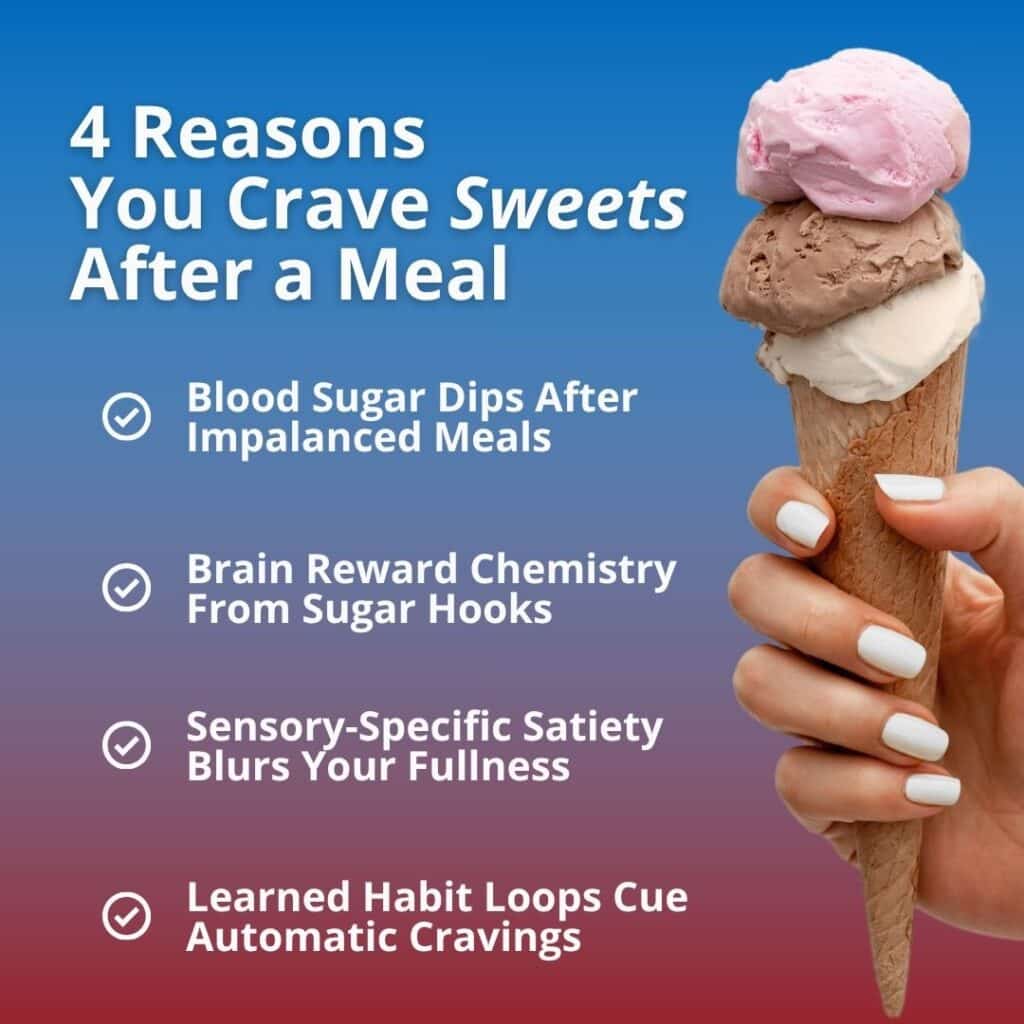
The Blood Sugar Connection
When you eat a meal high in refined carbohydrates, your blood sugar rises quickly and then drops just as fast. That drop is one of the most common reasons people want something sweet right after eating. Your body reads the dip as a signal to find quick energy, and sugar is the fastest source it knows of.
Meals built around white rice, white bread, or sugary drinks are the biggest offenders. A meal that includes protein, fiber, and healthy fats slows digestion and keeps blood sugar steadier, which tends to reduce the craving intensity after eating.
According to the Cleveland Clinic’s registered dietitians, if your body is not getting a balanced fuel source throughout the day, strong physical cravings, including for sweets, are a predictable result.
Dopamine, Serotonin, and the Reward Loop
Sugar does something your brain likes quite a bit. When you eat something sweet, your brain releases dopamine and serotonin, two chemicals linked to pleasure and mood. This creates a short-term reward feeling that your brain wants to repeat.
Over time, your brain learns that the end of a meal is when the reward comes. Even when you are not particularly hungry, the pattern fires, and the craving shows up.
Researchers at the Max Planck Institute for Metabolism Research discovered that the same brain neurons responsible for signaling fullness also trigger a drive toward sugary foods, meaning the impulse is not purely emotional or a lack of discipline.
This is also why people say they have a “dessert stomach” even after a full meal. It is not extra capacity. It is brain chemistry.
Sensory-Specific Satiety (Why Dessert Still Sounds Good When You’re Full)
There is a well-documented phenomenon called sensory-specific satiety. After eating a savory meal, your appetite for that same flavor profile drops. But a different flavor, like sweetness, still registers as appealing because your taste buds have not had it yet.
This is a survival mechanism. In a natural environment, it encouraged people to eat a variety of foods. Today, it mostly means that finishing a plate of grilled chicken and vegetables leaves your brain open to the idea of something sweet, even if your stomach is full.
The Habit Side of Sweet Cravings
Biology explains part of the picture. But for many people, the craving after a meal is primarily a learned pattern rather than a physical need.
How Conditioned Eating Patterns Form
Habits form through repetition. If you have ended most of your meals with something sweet for years, whether it was a piece of chocolate, a cookie, or even a flavored coffee drink, your brain has wired that association.
Charles Duhigg’s habit loop framework describes it well: there is a cue (finishing a meal), a routine (reaching for something sweet), and a reward (the pleasure or comfort that follows). Once that loop is established, the cue alone triggers the craving even when no physical need is present.
The good news is that you do not need to eliminate the cue or the reward. You just need to change the routine. Swapping the automatic dessert for a cup of herbal tea, a piece of fruit, or even a short walk can gradually replace the old pattern while still honoring the signal your brain sends.
If you want to get ahead of cravings before they hit, planning your meals so your plate already includes satisfying protein and fiber is one of the most effective preventive strategies.
Stress, Sleep, and Emotional Eating
Two factors that make sweet cravings significantly worse after meals are stress and poor sleep.
Stress raises cortisol, a hormone that increases appetite and specifically drives cravings for high-energy, high-sugar foods. If you regularly feel the urge for something sweet after a stressful day, cortisol is likely part of the equation.
Sleep deprivation has a similar effect. When you are short on sleep, your body produces more ghrelin (the hunger hormone) and less leptin (the fullness hormone). The result is stronger cravings for quick energy sources, including sugar, especially in the evening after a meal.
Both of these factors are worth paying attention to if you notice your post-meal cravings getting stronger during busy or high-stress periods. They are not a sign that you lack self-control. They are a sign that your body is under pressure.
How to Satisfy the Craving Without Derailing Your Goals
Managing post-meal sweet cravings is mostly about working with your body rather than overriding it.
- Build more balanced meals: A plate with enough protein, fiber, and healthy fat keeps blood sugar steadier and reduces the intensity of the post-meal drop. This alone often shrinks the craving significantly.
- Try naturally sweet foods first: Fresh berries, a small apple, Greek yogurt with a drizzle of honey, or a square of dark chocolate (70% or higher) can satisfy the sensory need without spiking blood sugar again. These are real options, not punishments.
- Use the 10-minute rule: Give yourself permission to have something sweet, but in 10 minutes. The craving often passes or softens in that window, which shows it was habit-driven rather than physiological.
- Replace the routine, not the reward: If the reward you are actually after is relaxation or a feeling of closure after eating, find a routine that delivers that: a short walk, a cup of cinnamon or peppermint tea, or a few minutes of quiet. The cue and reward stay the same. Only the middle step changes.
- Stay hydrated: Dehydration can mimic hunger and intensify cravings. Drinking water consistently throughout the day and after meals can reduce the frequency of false craving signals.
Related Questions to Explore
Does craving sweets after eating mean I have low blood sugar? Not necessarily. Post-meal sweet cravings can happen even when blood sugar is normal. If your craving strikes within an hour or two of eating, a blood sugar dip from a high-carb meal may be the cause.
But many post-meal cravings are habit-based rather than physiological. If you experience shaking, dizziness, or intense sugar hunger regularly, it is worth talking to a doctor to rule out blood sugar regulation issues.
Why do I crave sugar after a salty or savory meal? This is sensory-specific satiety at work. After a savory meal, your palate is satisfied with those flavors but still registers sweetness as appealing. It is a natural mechanism that once encouraged dietary variety. It also explains why dessert feels possible even after a filling dinner.
Can stress cause sweet cravings after meals? Yes. Stress elevates cortisol, which increases appetite and drives cravings for high-sugar, high-energy foods. If your post-meal sweet cravings are strongest on stressful days, stress management is a more useful target than trying to restrict sugar.
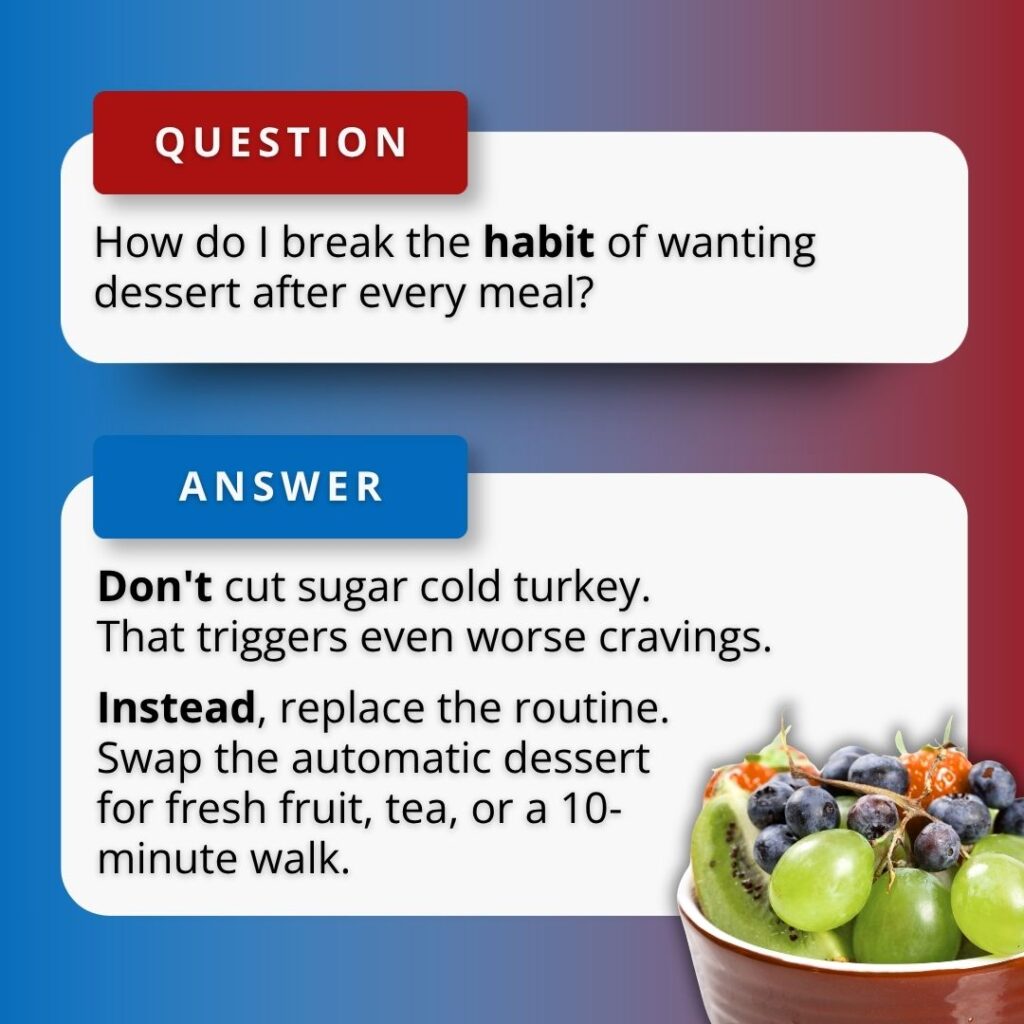
How do I break the habit of wanting dessert after every meal? The most effective approach is to gradually replace the dessert routine with a different one, rather than eliminating the habit cold. Examples include herbal tea, a short walk, or a piece of fruit.
Over time, the brain rewires the post-meal cue to the new routine. Cutting sugar completely tends to backfire, increasing cravings rather than reducing them.
When to Talk to a Nutrition Professional
Most post-meal sweet cravings are manageable with the habits covered above. But there are situations where working with a professional can make a real difference.
Consider reaching out if:
- Your cravings feel uncontrollable, and you are eating much more sugar than you intend to
- You notice strong cravings tied to low energy, shakiness, or brain fog after meals
- You have tried adjusting your meals and habits, and the cravings have not improved
- You are managing a health condition like diabetes, insulin resistance, or a hormonal imbalance that may be driving the pattern
- You want a structured nutrition plan rather than general tips
The Nutrition Support services at Mile High Fitness & Wellness include personalized coaching from registered dietitians who can look at your full eating pattern, identify what is driving your cravings, and build a plan that actually fits your life. Sessions are available virtually with flexible scheduling.
Conclusion
Post-meal sweet cravings are not a character flaw. They come from real biology: blood sugar patterns, the brain’s reward chemistry, and years of conditioned eating habits. The good news is that all of these are changeable.
Key takeaways:
- Balanced meals with protein, fiber, and fat reduce blood sugar dips and craving intensity
- Dopamine and serotonin are the main drivers of the brain’s post-meal sweet pull
- Habit loops are powerful but can be gradually replaced without eliminating the reward
If you are ready to stop guessing and start building eating habits that actually work for your body, explore nutrition coaching at Mile High Fitness & Wellness and schedule a consultation today.