
Clean eating does not have to be complicated. At its core, it means choosing whole, minimally processed foods as close to their natural state as possible, and reducing the highly refined, additive-laden foods that dominate most packaged food options.
This guide breaks it down simply so you can start making real changes without overhauling your entire life at once.
What Clean Eating Actually Means
Clean eating is often oversimplified into a rigid set of rules, but the underlying idea is practical: eat more real food and less food that has been manufactured for shelf life, flavor intensity, and convenience at the expense of nutrition.
The foundation looks like this:
- Whole foods: Fruits, vegetables, lean proteins, whole grains, legumes, nuts, and seeds in their natural or minimally altered state
- Minimally processed: Foods with short, recognizable ingredient lists where you can identify and pronounce everything on the label
- Reduced refined sugar: Less added sugar, which provides calories with no nutritional benefit
- Less sodium: Processed foods carry enormous amounts of sodium; whole foods naturally contain far less
- Healthy fats: Avocado, olive oil, nuts, seeds, and fatty fish, rather than trans fats or highly refined seed oils
Clean eating is not an elimination diet, and it is not about perfection. It is an approach to how you make food decisions the majority of the time.
The American Heart Association’s recommended eating patterns, including the Mediterranean diet and DASH diet, both align closely with clean eating principles and are associated with cardiovascular mortality rates up to 28 percent lower than typical Western diets.
What to Eat on a Clean Eating Plan
Proteins
Lean proteins form the backbone of a clean eating approach. Think:
- Chicken breast, turkey, and other poultry without skin
- Fish and seafood, particularly fatty fish like salmon, mackerel, and sardines rich in omega-3s
- Eggs, ideally from pasture-raised hens
- Legumes, including lentils, black beans, chickpeas, and edamame
- Plain Greek yogurt and cottage cheese
- Grass-fed beef and bison in moderate amounts
Vegetables and Fruits
These should be the highest-volume category on your plate. Leafy greens, cruciferous vegetables (broccoli, cauliflower, Brussels sprouts), root vegetables, peppers, tomatoes, cucumbers, and any other produce you enjoy are all clean-eating staples.
For fruit, the natural sugar content is part of a whole food package that includes fiber, vitamins, and antioxidants, making it fundamentally different from added sugar in processed food.
Whole Grains
Choose grains that retain their natural fiber and nutrients: brown rice, quinoa, oats, farro, barley, and 100 percent whole grain bread and pasta. The processing of refined grains like white rice and white flour removes the bran and germ, eliminating most of the fiber and nutritional value.
Healthy Fats
Fat is not the enemy in a clean eating framework. Avocado, olive oil, coconut oil (in moderation), nuts and nut butters, and seeds like chia, flax, and hemp seeds provide essential fatty acids and fat-soluble vitamins. The key is choosing fats that have not been heavily refined.
What to Reduce (Not Necessarily Eliminate)
- Ultra-processed snack foods: chips, cookies, crackers, packaged cakes
- Beverages with added sugar: sodas, energy drinks, commercial fruit juices
- Fast food and most restaurant food, which tends to be high in sodium, sugar, and refined oils
- Refined grains: white bread, standard pasta, white rice (as a daily staple)
Occasional indulgences do not undo a clean eating lifestyle. The pattern of your eating over weeks and months matters far more than any single meal.
A Simple Framework for Getting Started
Read Labels Before You Buy
Clean eating changes how you shop. When buying packaged food, look at the ingredient list before the nutrition facts panel. If the list is short and consists of words you recognize and could purchase at a grocery store yourself, that is a better sign than a long list of scientific-sounding additives, preservatives, and artificial flavors.
A useful rule: if you cannot pronounce half the ingredients, or if the list includes high-fructose corn syrup, partially hydrogenated oils, or artificial colors as one of the first several ingredients, look for a cleaner alternative.
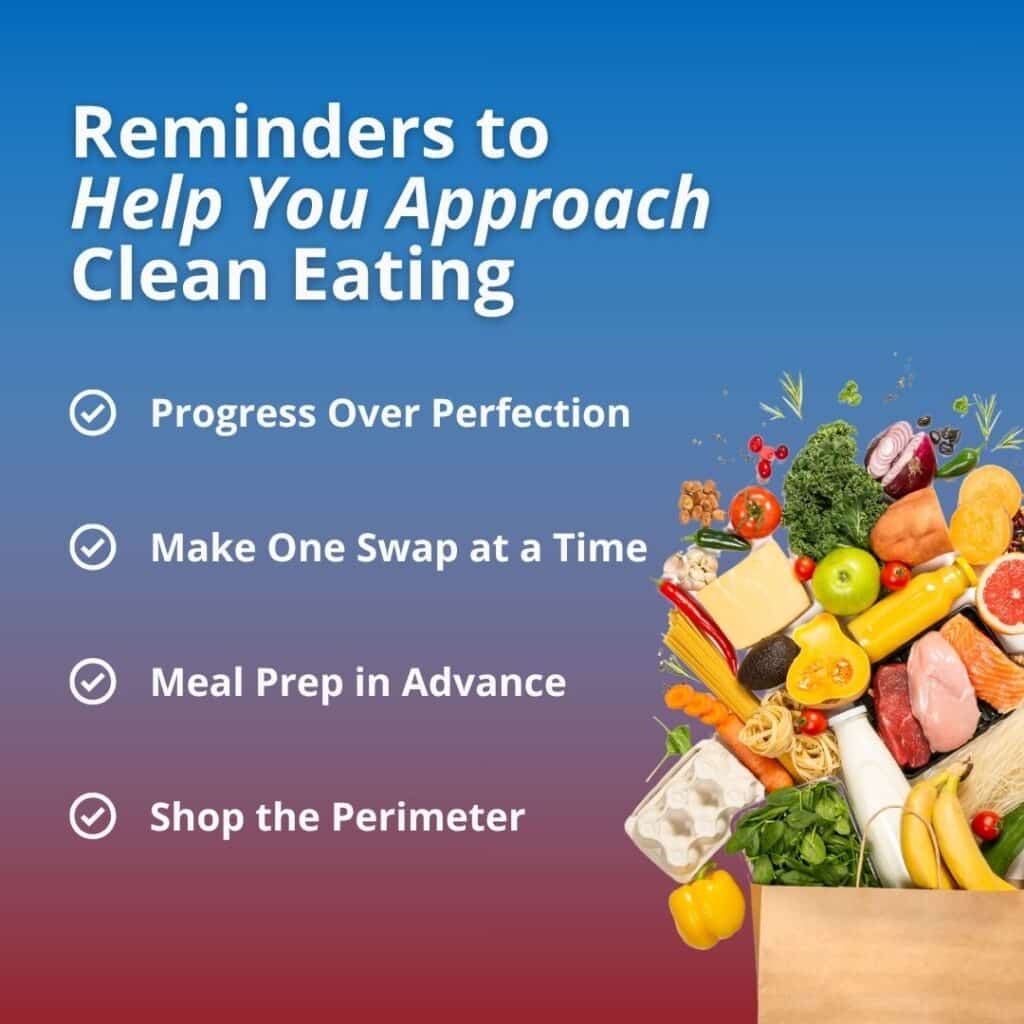
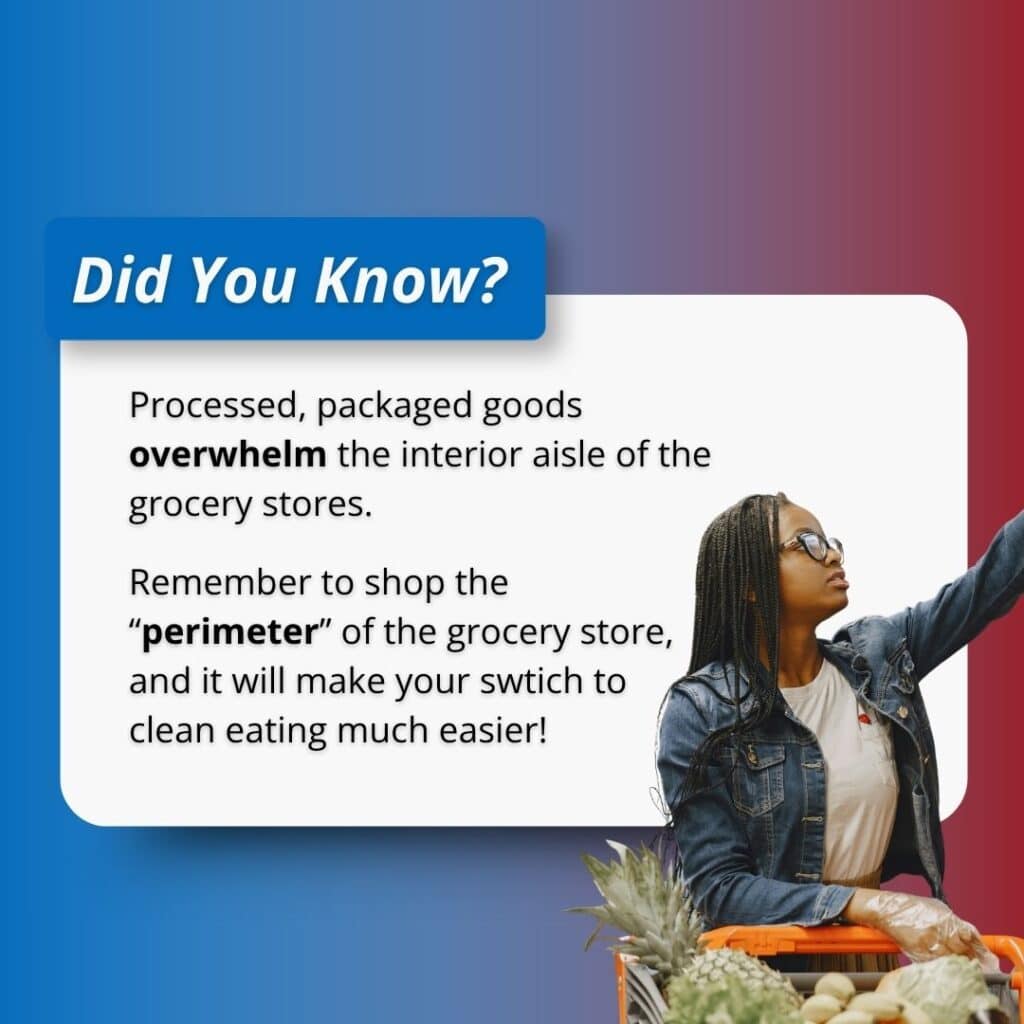
Shop the Perimeter of the Grocery Store
The perimeter of most grocery stores is where the produce, meat, dairy, and seafood sections live, all of which are whole foods or minimally processed. The interior aisles are dominated by packaged and processed goods. Start your shopping in the perimeter and be intentional about what you add from the interior aisles.
Meal Prep Reduces Decision Fatigue
The most common obstacle to clean eating is convenience. When you are hungry and pressed for time, processed food wins. Batch-cooking on Sundays or Monday evenings removes that obstacle. Cook a large pot of grain, roast two sheet pans of vegetables, and prep several protein sources.
Mix and match those components throughout the week into salads, grain bowls, wraps, and quick stir-fries without cooking from scratch every night.
Make One Swap at a Time
Trying to overhaul your entire diet simultaneously is the fastest path to abandoning it. Pick one realistic change per week:
| Week | Simple Food Swap |
| Week 1 | Swap your afternoon snack from chips or a candy bar to a handful of raw nuts and fruit |
| Week 2 | Cook two dinners at home that you would have previously gotten from a restaurant or frozen meal |
| Week 3 | Switch from white rice to brown rice or quinoa |
Stack these changes over time, and after two months, you will have made substantial progress without any single week feeling overwhelming.
Plate Your Meals Intentionally
A practical approach to portion balance: make half your plate vegetables, one quarter lean protein, and one quarter whole grain or starchy vegetable. This ratio applies whether you are eating at home, bringing lunch to work, or navigating a restaurant menu.
Clean Eating Does Not Require Perfection
One of the most important things to understand about clean eating is that the goal is not to be perfect. It is to shift your baseline. A person who eats whole, nutritious meals 80 to 85 percent of the time and enjoys occasional meals that do not fit the framework is eating in a fundamentally healthier and more sustainable way than someone who swings between extreme restriction and bingeing.
Celebrating incremental progress, forgiving occasional departures, and focusing on consistency over time is what makes clean eating a sustainable lifestyle rather than just another diet.
Related Questions to Explore
- How does Mile High Fitness distinguish clean eating from restrictive diets like keto? Clean eating focuses on whole-food quality rather than eliminating entire food groups. Our coaches help you prioritize minimally processed foods within a flexible, sustainable nutrition plan that fits your everyday lifestyle.
- Does Mile High Fitness require clients to buy organic to see results? Not at all. We focus on whole-food quality first, helping you make practical, budget-friendly choices at the grocery store that deliver maximum nutritional value without breaking the bank.
- How do Mile High Fitness programs help busy people eat clean? We provide time-saving strategies like quick batch cooking and simple five-minute meal assembly. Your coach will help you build a menu of fast, whole-food options that easily fit a hectic schedule.
- Can I still eat at restaurants while following a Mile High Fitness plan? Absolutely. We teach you how to navigate any menu by prioritizing grilled proteins, fresh vegetables, and smart swaps so you can enjoy dining out while staying completely on track.
- How does the Mile High Fitness clean eating approach assist with weight management? Whole foods are naturally filling and nutrient-dense, which drastically reduces cravings for processed items. Our approach helps you manage your weight naturally without the burnout of strict calorie counting.
Support Your Clean Eating With the Right Fitness Plan
Clean eating is more effective when paired with consistent physical activity. The body responds to good nutrition differently when it has a training stimulus to respond to.
At Mile High Fitness and Wellness, our nutrition coaching programs are designed to complement your training, whether your goal is weight management, athletic performance, or simply feeling better day to day. Our coaches help you create a personalized eating approach that fits your life, your food preferences, and your training schedule.
Conclusion
The American Heart Association offers research-backed guidance on dietary patterns that support heart health, much of which aligns directly with clean eating principles.
Explore our personal training programs to pair your clean eating approach with a structured fitness plan, or check out our group class schedule if you prefer a community environment. Nutrition and movement are most powerful together, and we build both into a plan that works for real people with real schedules.
Contact us online to schedule your consultation today!