
You know what you should do, and that working out helps. You know eating better makes you feel better. And yet the motivation just isn’t there. You feel stuck, low energy, and a little disconnected from the version of yourself that used to care more about all of this.
If that sounds familiar, you’re not alone. Lack of motivation is one of the most common struggles people bring to fitness and wellness professionals, and one of the most misunderstood.
In most cases, low motivation is a signal that something else is going on underneath the surface, physically, emotionally, or both. Understanding what that is makes the difference between spinning your wheels and actually moving forward.
What Lack of Motivation Really Means
When we can’t get started, we often blame our character. However, “low motivation” is frequently just a physiological signal that your body’s hardware is struggling.
Here is how to recognize when you are dealing with a system problem rather than a mindset one:
The Physical Signs of “Biological Friction”
- The “Heavy” Start: You have the mental desire to work, but your body feels physically weighted or lethargic, often a sign of dopamine baseline depletion.
- The Focus Flicker: You can’t hold a single thought for more than a few seconds. This “brain fog” usually points to sleep debt or circadian rhythm disruption.
- Hyper-Reactive Stress: You feel “wired but tired.” Small inconveniences feel like major obstacles, suggesting your nervous system is in a high-cortisol survival mode.
- Decision Fatigue: Even simple choices (like what to eat) feel paralyzing. This indicates your prefrontal cortex—the brain’s CEO—is under-resourced.
The Momentum Test
To confirm if this is a biological glitch, try the Two-Minute Rule. If you commit to a tiny action and still feel an intense physical “repulsion” to the task, your system is likely redlining.
The Reality Check: Motivation is an output, not an input.
If you’re checking the boxes above, stop looking for “inspiration” and start looking at your biological inputs: sleep, nutrition, and stress levels. Once the system is balanced, the “feeling” of motivation usually returns on its own.
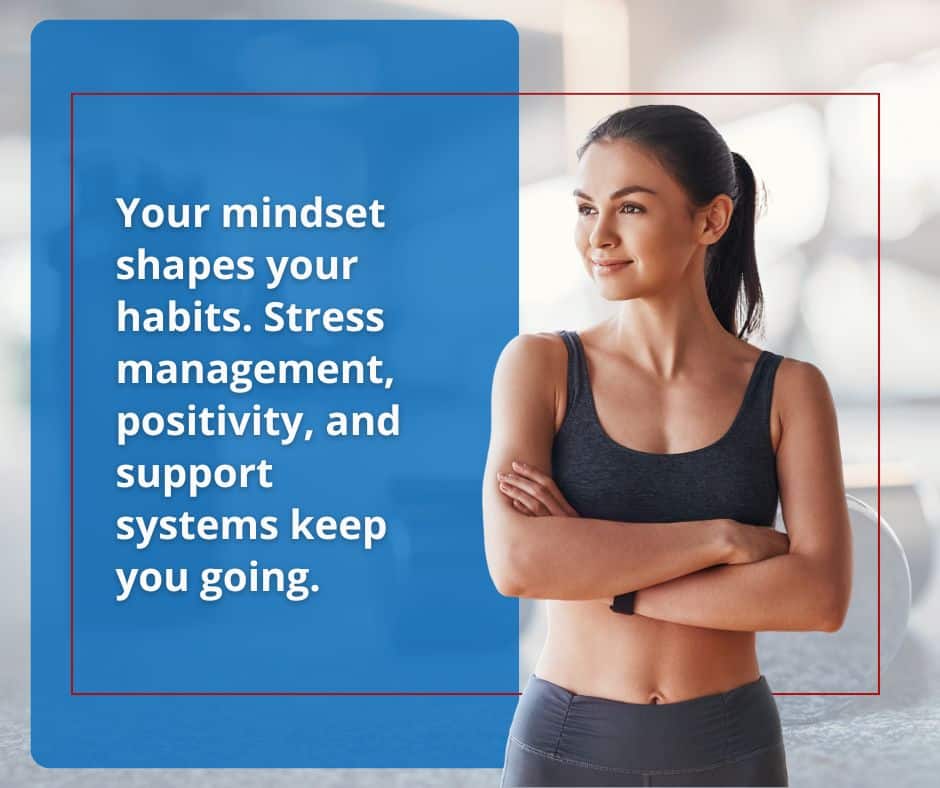
One of the most important things to understand is that motivation typically follows action, not the other way around. Chronic stress keeps your nervous system in a state that makes goal pursuit genuinely harder.
Understanding these underlying issues is the starting point for improving motivation in a lasting way. Focus on action over emotion, and motivation tends to catch up.
Common Causes of Low Motivation
If you feel like you’re constantly fighting an uphill battle against your own brain, it’s time to look under the hood. The following factors represent the most common ‘friction points’ that drain your energy and make even simple tasks feel difficult to accomplish.
Burnout and Chronic Stress
When your body is in a sustained stress state, it eventually triggers a physiological shutdown to conserve resources. This is known as burnout: a state of long-term exhaustion where even things that used to bring joy start to feel like heavy obligations. Because two-thirds of full-time workers experience this, it is one of the most common “hard blocks” to motivation.
It’s important to recognize that this isn’t a willpower problem; it’s a biological defense mechanism. When your nervous system is overloaded by chronic demands, your energy levels drop, and daily tasks become overwhelming as your brain prioritizes basic survival over high-level goal pursuit. Sometimes the easiest first step is practicing self-care.
Sleep Deprivation and Poor Diet
Sleep deprivation reduces cognitive function, willpower, and decision-making capacity. It also elevates cortisol and disrupts hunger hormones, increasing cravings for high-calorie foods. Meeting basic needs for enough sleep, nutrition, and hydration is the foundation for everything else.
A poor diet creates blood sugar instability that causes energy crashes throughout the day, often misread as a lack of motivation. Deficiencies in iron, vitamin D, B12, and magnesium are strongly associated with fatigue and are extremely common in people who exercise regularly or restrict calories.
Perfectionism and All-or-Nothing Thinking
Perfectionism affects 60-80% of high achievers and leads to avoidance of tasks due to fear of falling short. All-or-nothing thinking compounds this pattern, where missing one workout means writing off the entire week.
Practicing self-compassion interrupts this cycle by encouraging a kinder inner dialogue and making it easier to recover from setbacks. Aiming for done rather than perfect is one of the most practical mindset shifts for anyone struggling to get started.
Lack of Meaningful Goals
Without a clear, meaningful goal or sense of purpose, it is difficult to find the desire to act. Setting SMART goals, which are Specific, Measurable, Achievable, Relevant, and Time-bound, provides the structure that turns an intention into a plan and creates a feedback loop that supports greater motivation over time.
How to Get Your Motivation Back
Regaining motivation can feel challenging, especially when multiple factors in your life contribute to feeling unmotivated. However, by understanding practical strategies and making small adjustments, you can begin to rebuild your drive and momentum step by step.
- Start in Manageable Chunks. Breaking large goals into the smallest possible actions lowers the barrier to starting. A 15-minute walk counts. One healthy meal counts. You are building momentum, not transformation.
- Use the 10-minute rule. Commit to just 10 minutes on a dreaded task. You often find the motivation to continue once you have begun. Getting started is the hardest part.
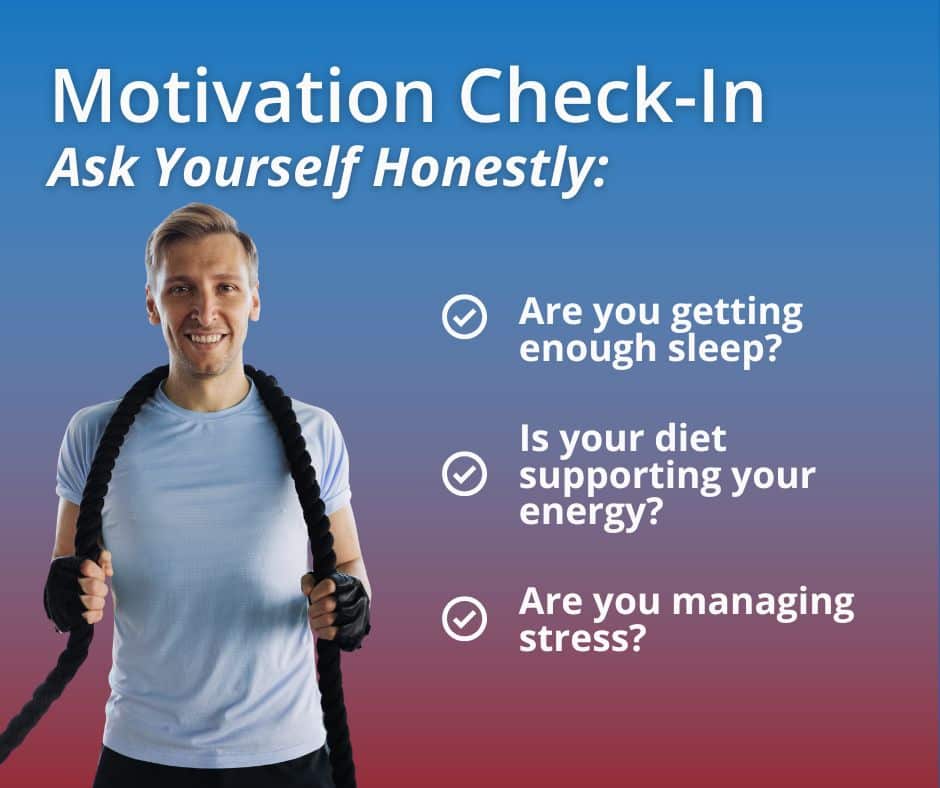
- Address the physical factors first. Check the basics before pushing through with willpower. Are you getting enough sleep? Is your diet supporting your energy? Are you managing stress? Ensuring adequate sleep, nutrition, and regular exercise is essential for maintaining the energy levels that motivation runs on.
- Change your environment. A cluttered environment leads to distraction and decreased motivation. Moving to a different room, going outdoors, or simply organizing your space can refresh perspective and provide a real mental boost.
- Build in accountability and social support. Motivation is easier to maintain when you have someone to show up for. Social support from a training partner, a coach, or a structured program removes daily decision fatigue and creates external accountability that carries you through low-motivation days.
- Practice self-compassion and manage negative self-talk. Self-doubt and negative thoughts are momentum killers, not motivators. Shifting your inner dialogue from critical to constructive is a practical strategy supported by research showing self-compassion reduces psychological distress and improves follow-through.
How Mile High Fitness Supports You
Getting motivated is easier when you’re not figuring it out alone. Mile High Fitness and Wellness offers personal training, nutrition support, corporate wellness programs, and professional massage therapy, available virtually or in person.
When sleep, stress, nutrition, and movement are working together, staying motivated becomes significantly less of a struggle.
- Personal Training & Exercise Support: Whether you are at home, in the office, or outdoors, our certified coaches provide tailored exercise solutions that require zero equipment. By focusing on customized movement plans, we help you bypass the “decision fatigue” of planning a workout so you can focus entirely on building momentum.
- Nutrition Support: Our registered dietitians and culinary experts address the physiological roots of low energy, like blood sugar instability and nutritional deficiencies. From personalized coaching to in-home meal preparation, we provide the fuel your brain needs to maintain focus and drive.
- Corporate Wellness Programs: We bring health to the workplace through onsite fitness classes, wellness seminars, and health fairs. These programs are designed to reduce burnout and boost morale by creating a community of support, making it easier for teams to stay motivated together.
- Professional Massage Therapy: Available as both therapeutic sessions and corporate chair massage, this service supports nervous system recovery. By reducing physical tension and lowering cortisol levels, massage therapy helps reset your body from “stress mode” to “growth mode,” creating the ideal conditions for motivation to return.
Other Questions People Ask About Motivation
Is lack of motivation always a mental health issue? Not always, but it can be. When low motivation is persistent and significantly affects daily functioning, consulting a mental health professional is appropriate. Fitness and nutrition support complement mental health care but should not replace it when mental illness is a factor.
How long does it take to build a consistent fitness habit? Research suggests new behaviors take 21 to 66 days to become automatic. Consistency in the early weeks matters far more than intensity. Showing up imperfectly is more valuable than waiting for perfect conditions.
Does regular exercise actually improve motivation? Exercise increases dopamine, serotonin, and norepinephrine, which directly support mood, cognitive function, and motivation. Even a single moderate workout has measurable effects that last several hours.
How can corporate wellness programs improve work motivation? Corporate wellness programs support overall well-being by promoting healthy coping skills, stress management, and physical activity during the workday.
These programs create a supportive environment that helps employees stay focused, reduce burnout, and improve mental health, which in turn boosts work motivation and productivity.
When to Seek Professional Support
Consider working with a professional if your motivation has been consistently low for weeks or months, especially when burnout, stress, or all-or-nothing thinking keep you stuck. Expert guidance can be particularly helpful if you have a specific health goal, such as losing weight or managing a chronic condition.
Mile High Fitness and Wellness offers a free consultation to help you identify the type of support that would make the most meaningful difference for you.
Conclusion
A lack of motivation is not a permanent state, and it is not a personal failing. It is a signal. Address the sleep, the nutrition, the stress, the negative self-talk, and the structure, and motivation tends to follow. Start small enough that you don’t need much motivation to begin, and let the momentum build from there.
Mile High Fitness and Wellness is here to support that process through personal training, nutrition coaching, massage therapy, and corporate wellness programs. We work with clients virtually and in person across the country and meet you exactly where you are.