This post covers the core benefits of massage therapy, how they play out in work and home settings, and what to look for when choosing the right type of session for your goals.
Massage therapy reduces stress, relieves muscle tension, and supports physical recovery in ways that go well beyond a simple treat. Whether you are managing long hours at a desk, recovering after workouts, or trying to sleep better at night, regular massage produces measurable results for both your body and your mind.
At Mile High Fitness & Wellness, professional massage therapy is available on-site at your workplace, at home, or at your next corporate event: no spa visit required.
What Massage Therapy Actually Does to Your Body
First things first, it helps to understand the basic biology. Massage therapy works on two levels: the physical (muscles, circulation, lymphatic flow) and the neurological (stress hormones, nervous system response).
Stress Hormones and the Nervous System
When you receive a massage, your body shifts out of its stress response and into a recovery state. Cortisol levels drop, while serotonin and dopamine rise. The result is a calmer nervous system, lower resting heart rate, and reduced muscle tension throughout the body.
This is not just a feeling. According to the American Massage Therapy Association, research supports massage therapy’s positive impact on stress, anxiety, and depression, with effects comparable to other established therapeutic approaches for certain conditions.
Circulation, Muscle Recovery, and Immune Support
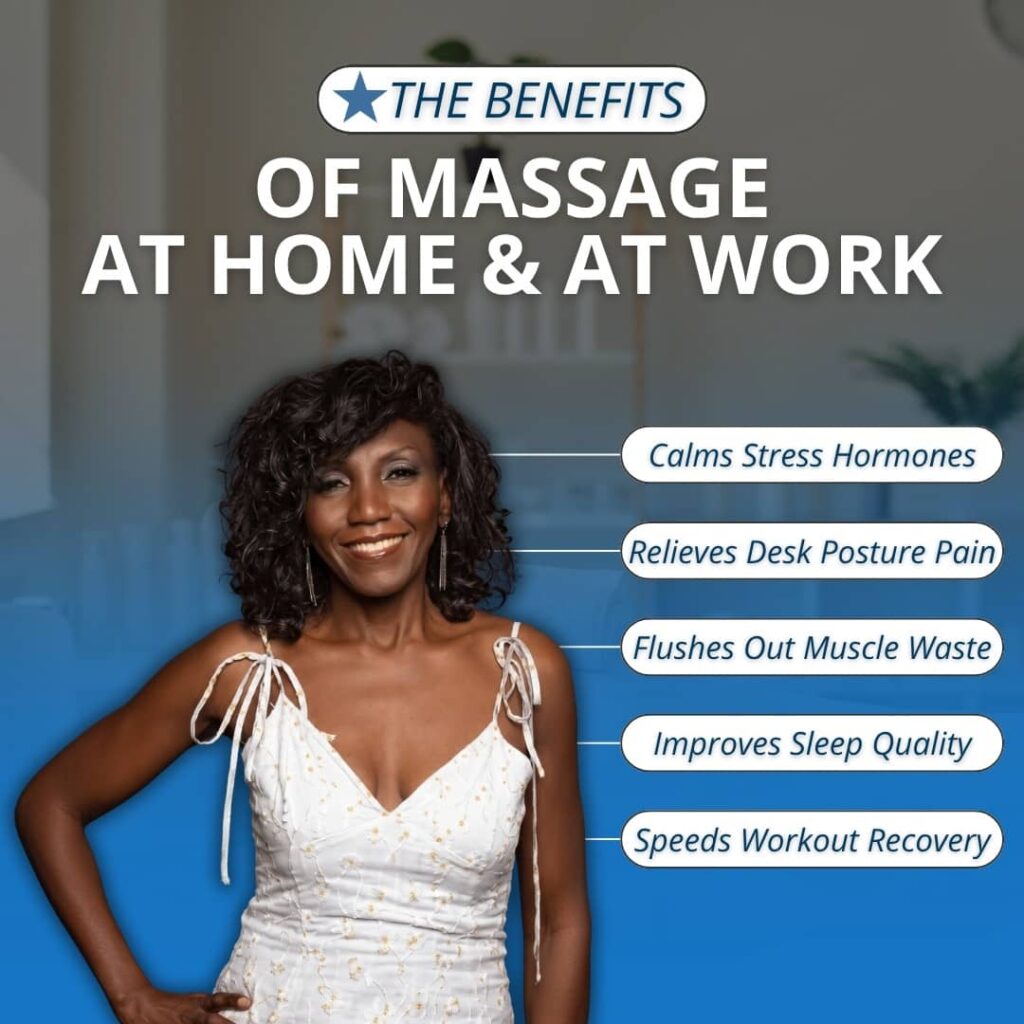
Massage improves blood flow to soft tissues, which delivers more oxygen and nutrients to muscles and helps flush out metabolic waste. This is why athletes use it for recovery and why people with chronic tension find lasting relief through regular sessions.
Massage also stimulates the lymphatic system. Because lymph fluid does not have its own pump the way blood does, manual pressure helps move it through the body. Better lymphatic flow supports immune function, reduces swelling, and speeds tissue recovery.
A few of the documented physical benefits include:
- Reduced acute and chronic muscle pain
- Improved flexibility and joint range of motion
- Lower resting muscle tension
- Faster recovery between workouts
- Reduced inflammation in soft tissue
- Better circulation to extremities
Benefits of Massage Therapy For Work
The workplace is one of the most common sources of both physical and mental strain. Long hours, desk posture, and back-to-back meetings create the exact conditions massage therapy is designed to address.
Relief for Desk-Related Pain and Tension
Sitting at a computer for hours compresses the neck, upper back, and shoulders. Over time, this leads to chronic pain patterns that reduce focus and contribute to fatigue. Massage directly targets these areas by releasing tight muscles, correcting postural imbalances, and restoring blood flow to tissue that has been static for hours.
The most common areas where desk workers benefit from:
| Area | Common Issue | How Massage Helps |
| Neck and upper traps | Tightness, headaches | Releases knots, reduces referred tension |
| Lower back | Compression from prolonged sitting | Decompresses soft tissue, improves lumbar mobility |
| Shoulders | Rounding forward posture | Loosens pec and shoulder tension, improves alignment |
| Forearms and wrists | Repetitive strain from typing | Reduces tendon tightness, improves circulation |
Focus, Energy, and Productivity
Chronic pain and high cortisol are two of the biggest drains on cognitive performance. When the nervous system is in a constant low-grade stress state, the brain has less capacity for sustained focus, problem-solving, and creative thinking.
Massage directly interrupts that cycle. Studies show that even a single session can sharpen focus and improve mood for hours afterward. Regular sessions have a cumulative effect, making it easier to maintain energy and mental clarity across the week.
Corporate Chair Massage: A Team-Wide Solution
Chair massage is specifically designed for workplace delivery. Sessions run 10 to 20 minutes per person, target the neck, shoulders, back, and arms, and require no disrobing. A licensed therapist brings all equipment and handles setup.
The format fits naturally into:
- Employee wellness programs and health fairs
- Staff appreciation days and team events
- Regular weekly or monthly workplace visits
- Conferences and corporate retreats
Mile High Fitness & Wellness provides professional on-site massage for corporate clients with flexible half-day and full-day scheduling. Everything is handled by the therapist, which means no coordination burden on your HR or events team.
Benefits of Massage Therapy at Home
The benefits of massage therapy do not end when the workday does. For individuals managing stress at home, recovering from physical activity, or dealing with poor sleep, regular sessions create meaningful relief in daily life.
Better Sleep and Recovery
Sleep is one of the most immediate benefits people report after a massage. The reduction in cortisol and the rise in serotonin that happen during a session also set the stage for better melatonin production, which directly affects sleep quality.
Per the Mayo Clinic Health System, documented benefits of regular massage include better sleep quality, quicker workout recovery, improved flexibility, and a strengthened immune response.
For anyone managing an active lifestyle, in-home massage sessions support recovery between training days, reduce the risk of overuse injuries, and help the body stay at full capacity more consistently. Pairing massage with good nutrition habits makes both more effective, since the body’s recovery systems depend on quality fuel as much as rest.
Managing Stress Between Busy Weeks
Stress does not stay at the office. It shows up at home as irritability, disrupted sleep, tension headaches, and difficulty relaxing. Regular massage acts as a scheduled reset for the nervous system, building resilience over time rather than just providing one-off relief.
This is especially useful for caregivers, parents, and anyone juggling multiple demanding roles at once. In-home massage removes the last barrier to access: you do not need to leave the house, find parking, or fit a spa visit into an already full schedule.
The 4 pillars of wellness at home and work (movement, nutrition, rest, and mindset) all benefit when stress is managed consistently. Massage supports at least three of the four directly.
Types of Massage Therapy and What Each One Does
Not every massage is the same. Choosing the right type depends on your goals, your physical condition, and whether you are looking for relaxation, pain management, or performance recovery.
| Type | Best For | Pressure Level |
| Swedish | General relaxation, stress relief, and first-time clients | Light to medium |
| Deep Tissue | Chronic muscle tension, injury recovery, and postural issues | Medium to firm |
| Chair Massage | Workplace events, quick targeted relief for desk workers | Light to medium |
| Sports Massage | Athletic recovery, injury prevention, and flexibility | Medium to firm |
| Hot Stone | Deep relaxation, circulation support, chronic tension | Light (heat does the work) |
Mile High Fitness & Wellness therapists customize sessions based on your goals, health history, and feedback during the visit. There is no one-size approach: the session adapts to you.

Related Questions to Explore
How often should you get a massage for the best results? For general wellness and stress management, most people benefit from a session once or twice a month.
If you are managing a specific issue like chronic pain, tight muscles from heavy training, or high daily stress, more frequent sessions of every one to two weeks tend to produce faster and longer-lasting results. A licensed therapist can help you figure out the right cadence for your situation.
What is the difference between Swedish and deep tissue massage? Swedish massage uses long, flowing strokes at lighter to medium pressure. It is designed for full-body relaxation and a nervous system reset.
Deep tissue massage targets deeper muscle layers using more direct pressure to break up chronic tension patterns, address scar tissue, and work on persistent knots. Both are beneficial. The choice depends on whether you want relaxation or targeted therapeutic work.
Can massage therapy help with chronic pain? Yes, for many types of chronic pain, including lower back pain, neck and shoulder tension, headaches, and pain from conditions like arthritis or fibromyalgia.
Massage reduces inflammation, improves circulation to the affected area, and interrupts pain signaling pathways in the nervous system. It works best as part of a broader wellness approach rather than as a standalone treatment for complex conditions.
Is massage therapy good for mental health? It is. Massage reduces cortisol and raises serotonin and dopamine, which directly affect mood, anxiety, and emotional regulation. Research from the American Massage Therapy Association shows that massage can reduce symptoms of anxiety and depression with effects comparable to other therapeutic approaches for certain conditions.
Many people also find that the physical experience of relaxing the body has a noticeable effect on mental clarity and emotional calm.
When to Book a Professional Massage Therapist
Self-care habits like stretching, hydration, and rest matter. But there are situations where working with a licensed professional produces results that those habits cannot match on their own.
Consider scheduling a professional massage if:
- You have persistent neck, shoulder, or back pain that is not improving with stretching alone
- You are training hard, and your recovery is not keeping up with your workload
- Your stress levels are consistently high and affecting your sleep, focus, or mood
- Your team or organization is planning a wellness event, health fair, or staff appreciation day
- You want regular maintenance sessions built into your wellness routine rather than waiting until you feel bad
Mile High Fitness & Wellness brings licensed massage therapists to your home, office, or event. Sessions are fully customized, all equipment is provided, and scheduling is flexible to fit around your life rather than requiring you to rearrange it.
Conclusion
The benefits of massage therapy extend across every part of daily life. At work, it reduces the physical toll of desk posture and the mental cost of sustained stress. At home, it supports sleep, recovery, and the ability to reset between demanding weeks.
Key takeaways:
- Massage lowers cortisol, raises serotonin, and shifts the body into recovery mode
- Regular sessions build cumulative benefits for pain, sleep, focus, and immune health
- Chair massage brings these benefits directly to the workplace without disrupting the day
If you are ready to make massage a regular part of your wellness routine, explore professional massage therapy at Mile High Fitness & Wellness and book a session that comes to you.