A health and wellness fair for employees is a workplace event that brings health screenings, education, and wellness activities to your team in one place. It works best as the kickoff to a year-round corporate wellness program, not a one-day event.
At Mile High Fitness & Wellness, we plan virtual and onsite health fairs for companies, school districts, and communities, and we connect each one to challenges, classes, and nutrition support. This guide covers what to include, how to plan one, and how to make it count.
What Happens at an Employee Health and Wellness Fair
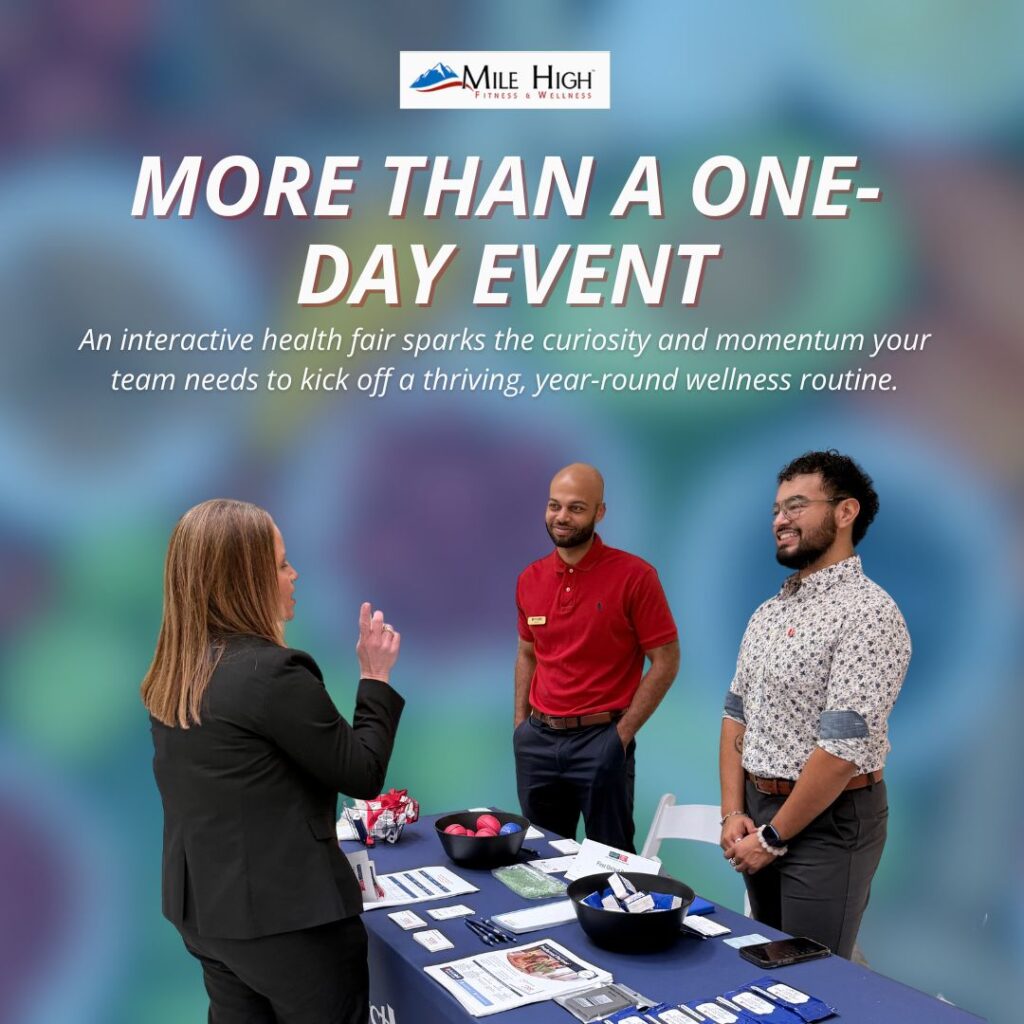
Employees move from booth to booth during the workday. At each stop, they get a screening, learn something new, or try a healthy activity. Most fairs run a few hours, so people can drop in on a break and leave with information they can use right away.
A typical employee fair includes:
- Health screenings, such as blood pressure, cholesterol, blood sugar, and body mass index
- Education tables on nutrition, sleep, stress, and physical activity
- Short demos, such as cooking, stretching, or desk exercises
- Vendor booths from local clinics, gyms, insurers, and wellness providers
- Vaccination clinics, often flu shots, when a provider joins
- Healthy snacks, giveaways, and raffles
Some screenings are free to employees. Others carry a small fee for lab work. If blood work is on the menu, employees may need to fast, so say so clearly in the invitation.
Health Fair vs. Wellness Fair: What Is the Difference?
A health fair focuses on screenings and prevention. A wellness fair focuses on daily habits like movement, nutrition, stress, and sleep. Most workplace events blend both, which is why many employers use the combined name.
| Health fair | Wellness fair | |
| Main goal | Catch risks early | Build healthy habits |
| Typical activities | Screenings, vaccines, clinic booths | Fitness classes, cooking demos, stress tools |
| Who staffs it | Nurses, lab techs, clinicians | Trainers, dietitians, coaches, therapists |
| Best for | Early detection | Long-term behavior change |
If you want both results, build a screening zone and an activity zone. Employees get a snapshot of their health and a fun way to act on it.
Why Employers Host a Health and Wellness Fair
Employers host a fair to put health information and services within easy reach of every employee. The health of your team shapes your culture and your results, and a fair is one of the fastest ways to show that you care.
A well-run fair can:
- Raise awareness of the wellness benefits you already offer
- Give employees screenings and expert advice without a trip to a clinic
- Introduce programs such as challenges, classes, and coaching
- Bring teams together across departments and locations
The CDC notes that effective workplace health programs can reduce health risks and improve quality of life for workers. A fair is a strong first step, as long as it leads to ongoing programs.
What to Include in Your Health and Wellness Fair
Pick a mix of screenings, education, and hands-on activities. The best fairs give employees a reason to stop at every booth. Use these four categories to map your floor.
Screenings and Clinical Services
Work with a licensed provider for any screening. Common choices are blood pressure, glucose, cholesterol, body composition, vision, and flu shots. Set up private spaces so people feel comfortable, and give each person a take-home card with their results and next steps.
Education and Expert Booths
A health education table lets employees ask questions about nutrition, activity, sleep, and stress. A dietitian booth is a strong draw. An “ask the nutritionist” station works well because people leave with one practical answer in about five minutes. Add a financial wellness or mental health table if your team would use it.
Hands-On Wellness Activities
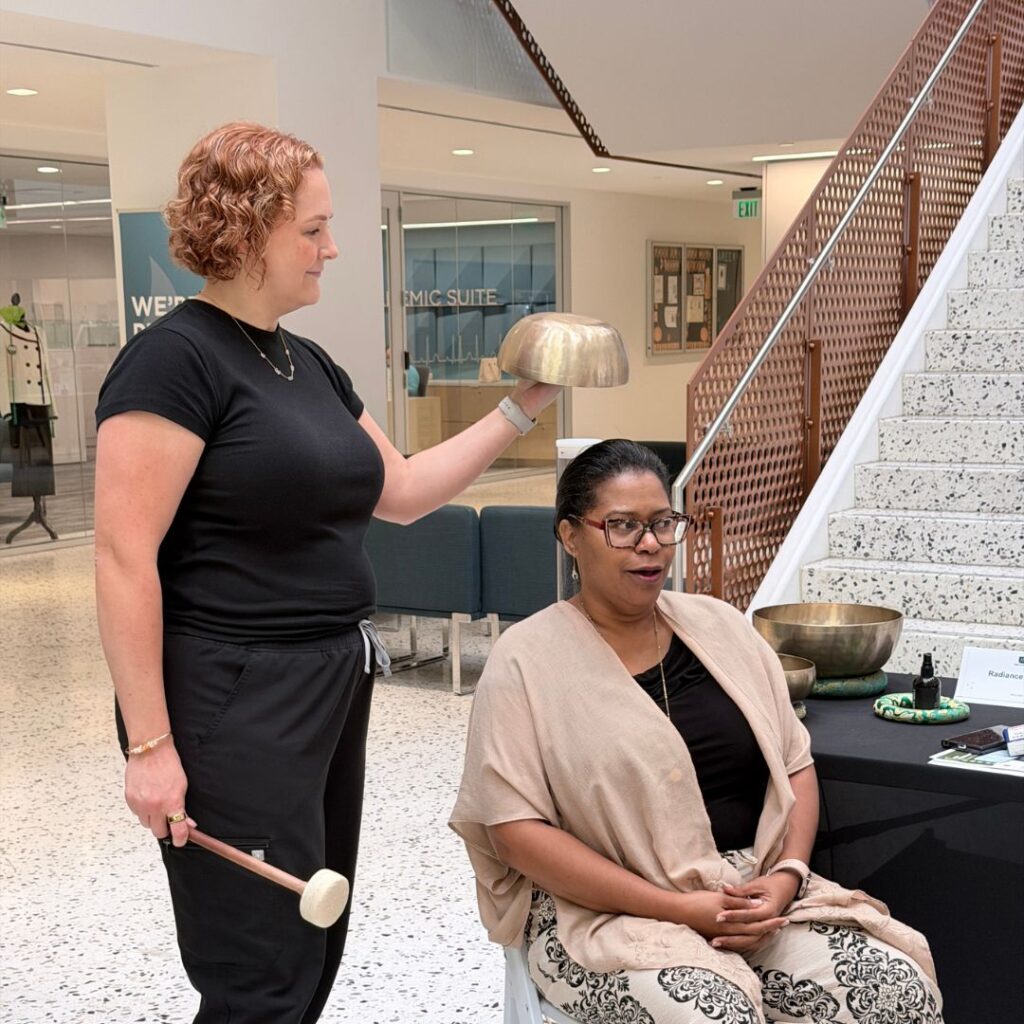
People remember what they do. Add short activities such as a chair massage, a healthy cooking demo, a build-your-own trail mix station, or a mini zen garden. Guided stretching, sound bath yoga, and art therapy sessions give people a calm break between screenings. These stations also keep lines moving and make the event feel fun instead of clinical.
Incentives and Giveaways
Small rewards raise turnout. Try a passport card where employees collect a stamp at each booth and enter a raffle. Offer healthy snacks and useful prizes like water bottles or resistance bands.
How to Plan a Health and Wellness Fair in 8 Steps
- Set one clear goal. Tie it to your wellness strategy. Success might mean screening participation, program sign-ups, or benefits education.
- Know your employees. Ages, work schedules, languages, and health needs shape your booth list. A remote team needs a different plan than a warehouse crew.
- Pick the format. Choose onsite, virtual, or hybrid. The next section helps you decide.
- Set the date, time, and budget. Avoid your busiest work periods. Start early, because vendors and clinic staff book up.
- Recruit vendors. Look for local clinics, dietitians, fitness providers, and insurers. Check each vendor’s credentials, and give them booth sizes and setup times in writing.
- Plan the logistics. Map the floor, confirm power and tables, add signs, set up privacy screens for screenings, and check that the space is accessible. Work with your facilities team early.
- Promote the event. Send an invitation with the date, what to expect, and any fasting notes. Remind people twice.
- Run it, then follow up. Name a day-of lead, collect feedback, and send a thank-you note with next steps.
If that list feels long, you are right. A good fair takes project management, vendor coordination, and event logistics on top of your day job. Many HR teams hand off the heavy lifting so they can focus on their people.
Which Format Fits Your Team?
Onsite fairs fit clinical screenings, and virtual fairs fit education and benefits information. Hybrid events combine both so remote and office teams can join together.
| Format | Best for | Watch out for |
| Onsite | Screenings, vaccines, hands-on demos | Space, vendor travel, shift schedules |
| Virtual | Remote teams, benefits education, live talks | Low engagement unless you add live sessions and prizes |
| Hybrid | Teams spread across locations | Needs one lead to coordinate both sides |
Mile High Fitness & Wellness runs both virtual and onsite health fairs, with national coverage for onsite events. We can match the format to your team and your goals.
Health Fairs & Your Corporate Wellness Program
A health fair works best as the front door to a larger corporate wellness program. It gets employees curious, and your ongoing programs give them somewhere to go next. Here is how the pieces connect:
| Stage | What happens | Mile High Fitness & Wellness service |
| Before the fair | Announce the event and invite sign-ups | Wellness portal with mobile-friendly program pages |
| At the fair | Screenings, booths, and hands-on activities | Onsite or virtual health fair, cooking demos, chair massage, health education table |
| Right after | Turn interest into action | Wellness challenges on physical activity, nutrition, sleep, and stress |
| Next 90 days | Build habits | Fitness classes, wellness seminars from a list of 40+ topics, and 4-session series on self-care, financial wellness, and stress |
| Ongoing | Personal support | Nutrition coaching and dietitian-led sessions |
This is the difference between a fair people enjoy and a fair that changes habits. Employees leave with a screening result, a new idea, and a clear next step, such as joining a challenge or booking a nutrition session.
If your team spans several sites, a portal and virtual sessions keep everyone connected. Our post on wellness ideas for remote employees shows more ways to keep remote staff involved.
Health and Wellness Fair Ideas That Boost Turnout
A fair with a theme gets more attention than a row of tables. Try one of these ideas:
- Kickoff for a wellness challenge. Launch a step challenge or hydration challenge at the fair, and let people sign up on the spot. Our step challenge ideas can help you pick one.
- Eat well edition. Pair a cooking demo with a dietitian booth and a healthy snack table. The CDC points to workplaces as a good place to make healthy, affordable food easier to find. Connect it to our nutrition support services.
- Stress less edition. Offer chair massage, guided breathing, art therapy, and a zen garden station.
- Move more edition. Add a short fitness class, a desk stretch demo, and a walking route map.
- Whole-person edition. Mix a financial wellness table, a sleep tips booth, and a mental health resource table.
- Family edition. Invite partners and kids, and add a kids’ fitness class or a gardening workshop.
Keep the experience easy to join. Offer sessions at different times so every shift can attend. Provide food choices that fit different diets, and choose a space that people with limited mobility can use. For remote staff, record live sessions so they can watch later.
How to Measure Whether Your Fair Worked
Track a few numbers, then compare them from year to year. Useful measures include:
- Attendance compared with the number of employees invited
- Screening participation
- Booth visits per person, using passport stamps
- Post-event survey scores
- Sign-ups for follow-up programs, such as challenges, coaching, or nutrition sessions
- Health risk assessment participation in the weeks after the event
Ask two survey questions: What was most useful? What do you wish we had offered? Use the answers to build a better event next year. Our post on improving health risk assessment participation shows how to build on the numbers you collect.
Related Questions to Explore
- What is a corporate health fair? A corporate health fair is a workplace event where employees visit booths for health screenings, education, and wellness activities. Employers use it to raise awareness of benefits and introduce wellness programs. It can run onsite, online, or both.
- What should an employee health fair include? Include screenings, education booths, and hands-on activities such as cooking demos or chair massage. Add a dietitian or nutrition table and a simple incentive like a raffle. Then connect the event to follow-up programs so the momentum lasts. See our full list of corporate wellness programs.
- How do you get employees to attend a health fair? Promote it early, hold it during work hours, and make it easy to drop in. Add a passport raffle and healthy food. Leaders who attend and encourage their teams make a big difference. Our post on weekly wellness check ideas offers more ways to keep people engaged.
- Are virtual health fairs worth it for remote teams? Yes, for the right goal. Virtual fairs work well for remote teams, benefits education, and live health talks. They cannot replace in-person screenings, so many employers use a hybrid format. Add live sessions and prizes to keep people engaged.
- Do employees need to fast before a health fair? Employees may need to fast if the fair offers certain blood tests, such as cholesterol and glucose. Many events ask for 8 to 12 hours without food, with water allowed. Rules vary by provider, so confirm with your screening partner and put the instructions in the invitation.
- What are the benefits of a health fair for employers? A health fair raises awareness of your wellness benefits, gives employees easy access to screenings and expert advice, and builds team spirit. It also introduces programs that can lead to healthier habits over time. Learn more in our post on why employee wellness programs are not just a trend.
When to Call a Professional
You can run a small fair on your own. A lunch-hour event with two or three booths is a fine place to start. Call a professional when the event grows, when screenings are involved, or when your team works across several sites.
Mile High Fitness & Wellness plans health fairs from start to finish. Our team handles:
- Strategic planning so the fair supports your business goals, wellness strategy, and employee makeup
- Exhibitor coordination, including finding, prescreening, and booking reliable vendors
- Project management with a detailed schedule that keeps you on track
- Logistics, including coordination with your facilities team
- Marketing, including a promotional flyer
- On-site management so the event runs smoothly
We also run virtual health fairs on our wellness platform. Before you book any screening provider, confirm that the staff holds the right licenses.
Conclusion
A strong health and wellness fair has a clear goal, a mix of screenings and hands-on activities, and a plan to follow up.
- Blend screenings with activities so employees can learn and act.
- Choose onsite, virtual, or hybrid based on where your team works.
- Connect the fair to challenges, classes, and nutrition support so habits stick.
Ready to plan yours? Explore our corporate wellness programs or contact Mile High Fitness & Wellness to talk through virtual and onsite health fair options.