
The best wellness ideas for remote employees mix physical movement, mental health support, and social connection, and they work because they are flexible enough to fit any schedule or time zone. Without a shared office, wellness has to be built into how your team works, not bolted on as an extra perk.
Whether your team is in Denver, Tampa, or spread across time zones, a well-designed program can close the gap between work and wellbeing.
This guide covers practical ideas across physical, mental, and social health, along with how to build a foundation that lasts and how to know if it is working.
Remote Teams Need a Different Approach to Wellness
Office gyms and in-person events do not reach a team working from living rooms, coffee shops, and coworking spaces. Wellness for remote teams has to travel with the employee, not sit in a break room. That means recorded sessions instead of one live slot, activities that work across time zones, and a program employees can join from a laptop as easily as an office.
Prioritizing wellness for remote teams leads to real, measurable gains:
- Healthier employees: less burnout, more energy, and better focus during the workday
- Stronger teamwork: shared goals and shared challenges build bonds even without shared space
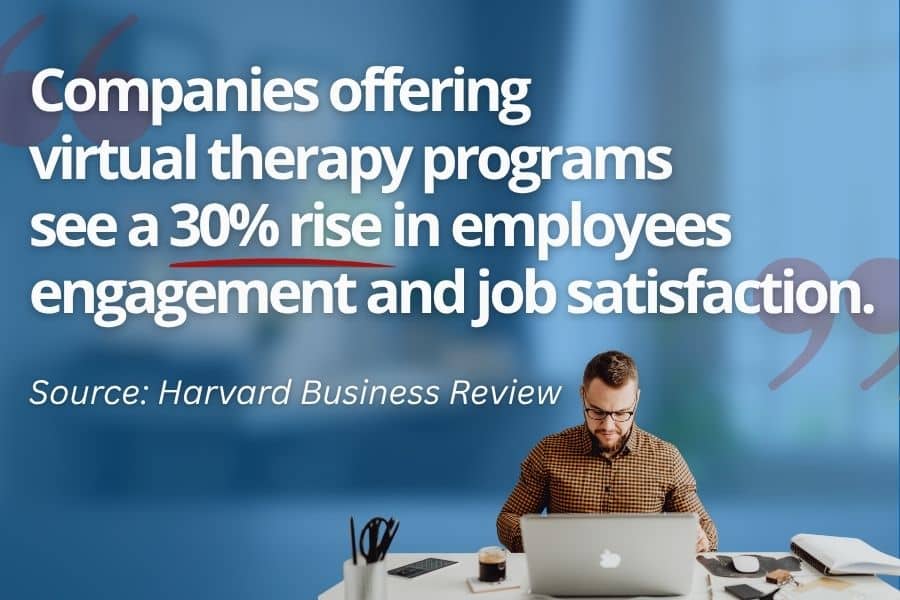
- Lower turnover: employees who feel their employer cares about their well-being tend to stay longer
- Better performance: healthy, rested employees communicate better and produce stronger work
A remote wellness program is not a nice-to-have add-on. For distributed teams, it is often the main way a company signals that it cares about its people day to day, not just during a benefits enrollment period.
Common Challenges of Remote Team Wellness
Remote wellness programs run into four recurring problems: screen fatigue, isolation, blurred routines, and uneven participation.
- Screen fatigue: back-to-back video calls with no walk to a conference room in between lead to exhaustion by mid-afternoon
- Isolation: the casual hallway chat or lunch invite that builds connection in an office simply does not happen on its own remotely
- Inconsistent routines: without a commute to mark the start and end of the day, work and personal time blur together
- Unequal participation: a single live session at 10 a.m. Mountain time leaves out employees three time zones away, or anyone with a caregiving schedule that does not allow it
Naming these challenges up front helps you pick ideas that are flexible and fair for everyone, instead of guessing what will land and wondering later why turnout was low.
Build the Foundation First
A wellness program sticks when it is inclusive, flexible, consistent, and clearly communicated. Skip the foundation and even good ideas fizzle out after a few weeks.
| Foundation piece | What it looks like |
| Inclusivity | Options that fit different fitness levels, lifestyles, and comfort zones |
| Flexibility | Employees choose when and how to participate; recorded sessions work well |
| Consistency | Regular programming beats one-off events |
| Communication | Clear announcements, visible wins, and ongoing feedback |
Poor communication about a program’s benefits, for the employee, their family, and the business, is one of the fastest ways to lose participation. Say what the program offers and why it matters every time you promote it.
A simple example: instead of a single company-wide yoga class at a fixed time, offer a recorded version employees can do whenever it fits their day, plus a live option for anyone who wants the group energy.
That one change touches all four foundation pieces at once: inclusivity, flexibility, consistency, and clear communication about how to join.
Physical Wellness Ideas for Remote Employees
Movement is one of the most reliable ways to lift mood and energy during the workday. A few accessible ideas go a long way.
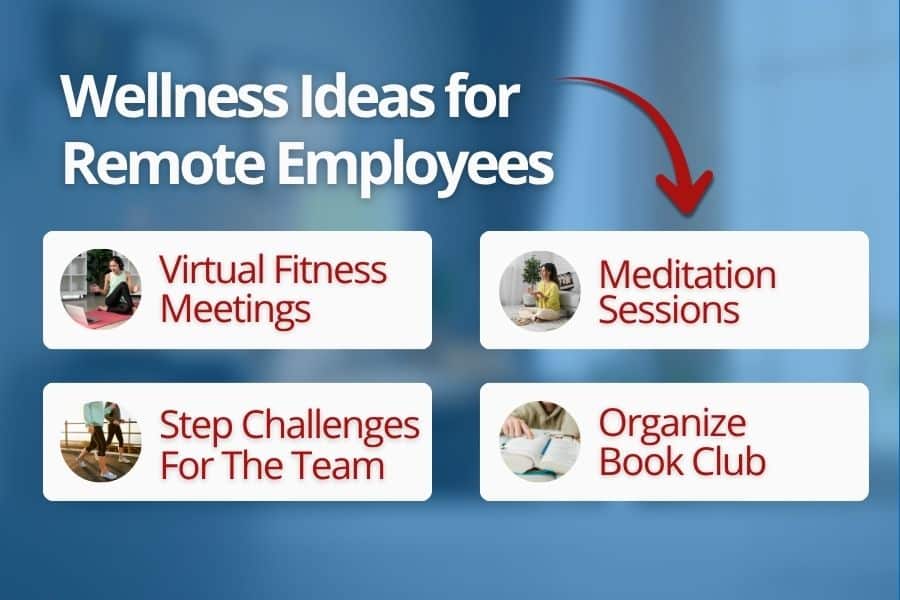
- Virtual classes: weekly online yoga, Pilates, or low-impact strength sessions scheduled between meetings, with a recording posted for anyone who could not attend live
- Micro-breaks: a 5-minute stretch every hour, reinforced through a scheduled reminder in company chat so it becomes a habit rather than an afterthought
- Step or activity challenges: friendly competition between offices, for example, Denver vs. Tampa step counts over a month, with small prizes for participation rather than only for winning
- Home office ergonomics: a short training or a simple checklist on setting up a safe, comfortable workspace to prevent back and neck pain from long hours at a laptop
Mental and Emotional Wellness Ideas
Emotional wellbeing gets overlooked easily, but it drives long-term productivity and retention just as much as physical health.
- Mindfulness and meditation: a short guided session to start or end the day, kept optional and low-pressure so it fits people who are new to the practice
- Gratitude practices: a weekly prompt in a shared channel to write down one positive moment from the week, personal or professional
- Confidential support: clear, visible access to a mental health professional or wellness coach, with the process for reaching out explained plainly so no one has to dig for it
- Flexibility and rest: occasional wellness afternoons or optional mental health days that employees can take without justifying the reason
Social Wellness Ideas That Build Connection
Social wellness builds the sense of belonging that remote teams often miss without a shared office. These ideas work best when they are genuinely optional and light on pressure to perform or be “on.”
- Virtual social events: online trivia, coffee breaks, or informal team lunches scheduled during normal work hours, not tacked on after
- Wellness ambassadors: a small, rotating committee that leads efforts, shares updates, and gives feedback a direct line back to leadership
- Volunteer opportunities: remote mentoring or supporting local food drives in your team’s home cities, which also builds goodwill in the community
- Peer recognition: a simple way to highlight employees who show up consistently for wellness activities, whether that is a shoutout channel or a small monthly spotlight
Low-Cost Wellness Ideas for Remote Teams
A strong program does not need a large budget. Some of the most effective ideas cost little or nothing, which also makes them easier to keep running when budgets tighten.
- Share wellness tips in the company newsletter or a dedicated chat channel
- Encourage walking meetings instead of video calls when the conversation does not require a screen
- Run hydration or step challenges tracked through a free shared spreadsheet or app
- Recognize consistency with a shoutout or small perk instead of relying on costly rewards
- Point employees toward free resources they may not know about, such as an employer-sponsored EAP or a mental health app included in benefits
Programs built on inclusion and simplicity tend to hold engagement better than ones centered on expensive perks that only a portion of the team ever uses.
Measuring Success in Your Wellness Program
You do not need a complex dashboard to know if a wellness program is working. A few simple, human-centered metrics tell you most of what you need.
- Participation rates: how many people join each activity, and whether that number is growing or shrinking
- Feedback: short, anonymous surveys after a challenge or event, asking what worked and what did not
- Self-reported energy or stress: a quick pulse question in a regular check-in can surface issues before they show up elsewhere
- Absenteeism and sick days: a slow, steady change here is a lagging but meaningful signal
Review these numbers on a regular cadence, not just once a year, so you can adjust before interest drops off.
Keep a Remote Wellness Program Going
Most wellness programs fail from a lack of variety, not a lack of good intentions. Keep interest up with a few habits:
- Rotate activities every quarter with new challenges or themes
- Collect feedback on what is working and what is not
- Lead by example so leaders participate visibly
- Share results through participation stats or short success stories
Review your program every six months, add new ideas, and retire the ones that have gone stale.
Related Questions to Explore
- What makes a successful remote wellness program? Programs that are inclusive, flexible, and consistent tend to work best. Employees need to be able to choose how and when they participate, and the program needs to show up regularly rather than as a one-time event.
- How can small businesses build a wellness program with a limited budget? Start small with movement challenges, mindfulness sessions, or a recurring newsletter tip. None of these require a large budget, and they build a foundation you can expand later.
- How often should a wellness program be refreshed? Review your program roughly every six months. Watch for declining participation, repetitive activities, or shifts in employee feedback as signs it is time for an update.
- What if participation in wellness activities is low? Survey employees to understand the barrier, whether it is timing, format, or lack of awareness, then adjust based on what you hear. Programs that ask for feedback and act on it tend to recover participation faster than ones that add more incentives without changing the format.
When to Call a Professional
If your team is struggling with participation, consistency, or simply does not have the bandwidth to run a program internally, a wellness partner can take the logistics off your plate.
Mile High Fitness & Wellness provides:
- Virtual and on-site wellness programs
- Corporate fitness and mindfulness sessions
- Custom wellness challenges built for remote or hybrid teams
- Individual and group health coaching
Serving Denver, CO, and Tampa, FL, Mile High Fitness & Wellness designs holistic programs that fit how your team actually works. If burnout is already a concern for your team, our guide on how to prevent employee burnout is a good next read.
Conclusion
Wellness ideas for remote employees work best when they are flexible, consistent, and genuinely easy to join. Small, steady changes, like daily movement breaks, guided mindfulness, or a regular team check-in, add up to real gains in health and morale.
- Build a foundation of inclusivity, flexibility, and clear communication first
- Mix physical, mental, and social ideas so there is something for everyone
- Review and refresh the program every six months
If your organization is ready for a program built around your remote team, schedule a free wellness consultation with Mile High Fitness & Wellness