
You prevent employee burnout by fixing the workplace conditions that cause it, not by asking employees to cope better. That’s the finding behind most current research on the subject, including work from Gallup: burnout is mostly a systems problem, not a personality problem. A recent Paychex survey found 60% of HR leaders are worried about burnout on their team, and 30% of employees already say they feel burned out.
At Mile High Fitness & Wellness, we build corporate wellness programs for teams across the country, and burnout prevention comes up in almost every conversation we have with HR leaders.
Here’s what actually causes it, how to spot it early, and six practical steps that reduce it.
What Causes Employee Burnout
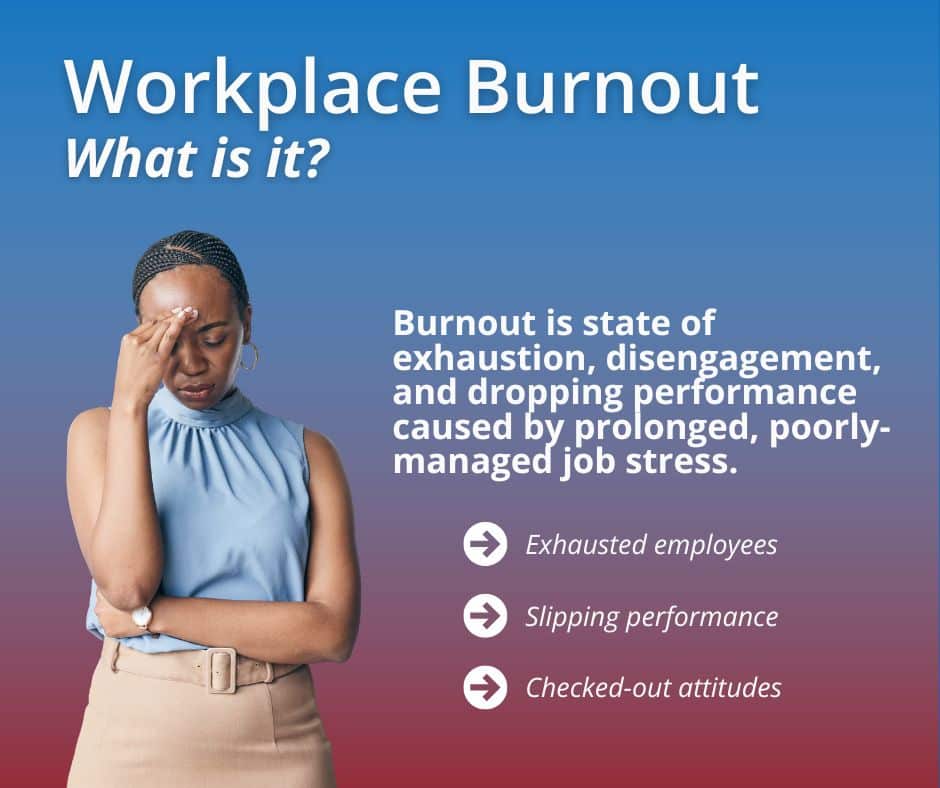
Burnout comes from a mismatch between what a job demands and what a person has the resources to handle.
The World Health Organization defines it around three markers: constant exhaustion, growing cynicism about the job, and a drop in how effective someone feels at their work.
A few conditions drive that mismatch more than any others:
- Too much work, too little time. Tight deadlines and a heavy workload are the most common burnout trigger.
- Low control. Employees who have little say over their schedule, workload, or how they do their job disengage faster.
- Unclear expectations. Shifting priorities and vague feedback create constant, low-grade stress.
- Thin recognition. People who feel unseen stop bringing extra effort to their work.
- No real recovery time. An “always-on” culture, where messages come in after hours, keeps the stress response switched on long after the workday ends.
None of these are about an employee’s resilience. They’re about how a job is designed.
Signs Your Team Is Heading Toward Burnout
Burnout builds slowly, so the early signs are easy to miss. Watch for:
- A normally reliable person starts missing small deadlines.
- Someone who used to speak up in meetings goes quiet.
- Sick days and last-minute time-off requests increase.
- Team members seem irritable, cynical, or checked out in one-on-ones.
- Output quality drops even though hours worked stay the same or increase.
Gallup research found that burned-out employees are 63% more likely to take a sick day and more than twice as likely to be job hunting. Catching these signs early is far cheaper than losing the employee.
6 Practical Ways to Prevent Employee Burnout
The right approach depends on where your team is right now. A team in a rough patch needs different support than a team that’s thriving but stretched thin, which is why we tailor recommendations to your team’s current growth stage rather than using one plan for everyone.
1. Audit workloads, not just headcount. A team can be fully staffed and still overloaded if work isn’t distributed evenly. Check in on capacity per person, not just per team.
2. Give people real control. Where you can, let employees set their own hours, choose their tools, or have input on priorities. Autonomy is one of the strongest protective factors against burnout.
3. Train managers to spot it early. Most managers aren’t taught what burnout looks like before it becomes a resignation letter. A short training on early warning signs pays for itself.
4. Protect recovery time. Normalize logging off, taking full lunch breaks, and using PTO. If leaders don’t unplug, no one else will either.
5. Build movement into the workday. Short, regular breaks that get people away from their screens measurably reduce stress. This is one of the reasons workplace wellness challenges work as well as they do: they give people a low-effort reason to step away from their desk.
6. Invest in structured support. Ad hoc perks rarely move the needle. A dedicated team health coach or a corporate wellness program gives employees an ongoing, consistent resource instead of a one-time gesture.
According to NIOSH’s Total Worker Health framework, the most effective burnout prevention treats safety, health, and wellbeing as one connected system, not three separate programs. That systems view points to manager training and workload management as two of the highest-leverage places to start.
How to Know If Your Strategies Are Working
You’ll see it first in the leading indicators, not the lagging ones. Track sick-day and unplanned time-off trends, PTO usage (rising is good, near-zero is a warning sign), and manager one-on-one notes for signs of disengagement. A short quarterly pulse survey on workload and energy is the most reliable early read, since it catches shifts months before they show up in turnover or performance reviews.
If those numbers are moving in the right direction, even slowly, your changes are working. If they’re flat after a quarter or two, revisit which of the six strategies above you’ve actually put in place versus just discussed.
Related Questions to Explore
- Is employee burnout the employee’s fault or the employer’s? Burnout is driven mainly by working conditions: workload, control, and support. Individual coping habits matter, but they can’t offset a job that’s structurally unsustainable.
- How long does it take to recover from burnout? Recovery timelines vary widely, from a few weeks for mild burnout with quick changes to several months for more severe, prolonged cases. Removing the root cause, not just resting, is what determines how fast someone bounces back.
- Can a wellness program actually prevent burnout? Yes, when it addresses real causes like workload and recovery time rather than only offering perks. A corporate wellness program that includes stress management, movement, and manager support does more than a gym discount ever will.
- What industries have the highest burnout rates? Healthcare, education, and customer-facing roles tend to report the highest burnout rates, largely due to high emotional demand and low control over schedules.
- How do you measure burnout risk before it becomes a problem? Regular, anonymous pulse surveys on workload, energy, and engagement catch burnout risk months before it shows up in turnover numbers.
When to Call a Professional
If burnout signs show up in more than one or two people, or if you’ve tried basic fixes like adjusting workloads and it hasn’t helped, it’s worth bringing in outside support. A wellness partner can run a proper needs assessment, train your managers, and build a program that fits your team’s size and budget instead of a generic template. Mile High Fitness & Wellness offers a free consultation to help you figure out where to start.
Conclusion
Employee burnout is preventable, but only if you treat it as a workplace design problem instead of a personal one. Start here:
- Fix the workload, control, and recognition gaps that cause burnout in the first place.
- Train managers to catch the early signs before someone quits.
- Build in real recovery time and structured wellness support, not just occasional perks.
If you’re ready to put a real plan behind this, Mile High Fitness & Wellness can help you build a corporate wellness program that fits your team.