
A couple workout is one of the easiest ways to stay consistent with fitness in 2026. When you train together, you build shared habits, support each other’s goals, and remove many of the barriers that cause people to quit. The key is keeping workouts simple, flexible, and realistic.
This guide breaks down practical couple workout ideas you can actually stick with, whether you train at home, at the gym, or combine both approaches.
Why Couple Workout Routines Matter More Than Ever in 2026
Life is busy. Work schedules, family responsibilities, and constant screen time make it harder to stay active. Many people start fitness plans with good intentions, but lose momentum within weeks.
A workout done as a couple helps solve that problem.
Training together adds accountability without pressure. You are less likely to skip a workout when someone else is involved. It also turns exercise into shared time instead of another obligation.
Fitness routines that are easy to fit into daily life are more successful than rigid, high-intensity plans. Working out together consistently can help couples build long-lasting habits and shared results that are easier to maintain over time.

What Makes Couple Workouts Easy to Stick With
Not all couple workouts are sustainable. The ones that last share a few important traits.
Why Consistency Is the Biggest Challenge
Research consistently shows that most people struggle to stay consistent with workouts, with up to 80 percent of fitness starters dropping out within a few months. Partner workouts can counter this by adding accountability, support, and routine.
Exercising with someone else significantly increases the likelihood that both partners follow through over the long term.
Simplicity Beats Intensity
You do not need long workouts or complex programs. Short sessions done consistently are more effective than pushing too hard for a few weeks and quitting.
A simple couple workout might include:
- Basic strength movements
- Light cardio
- Mobility or stretching
When workouts feel manageable, you are more likely to keep going.
Shared Accountability Without Pressure
Good couple workouts are about support, not competition. Whether you’re cheering each other on through bodyweight squats or cycling through partner pushes and pulls, shared routines help both partners stay motivated without pressure.
This is why structured plans work so well. Alternating supersets allow one partner to work while the other rests, keeping energy high and progress consistent.
How to Build a Couple Workout Around Real Life Schedules
One of the biggest reasons couples stop working out together is scheduling stress. The solution is flexibility.
Choose two or three days each week to train together and treat those sessions like appointments. They do not need to be long. Even 20 to 30 minutes can be effective. Quick, no-equipment partner workouts, such as 15-minute partner routines, show that you can work on strength, cardio, and core in a short amount of time at home or outdoors.
Some couples prefer different times of day. Many find morning sessions help them start strong, while others enjoy evening workouts as shared wind-down time. Not every workout needs to be shared, though. Mixing joint and individual sessions often balances personal goals with shared fitness time.
Simple Couple Workout Ideas You Can Do at Home
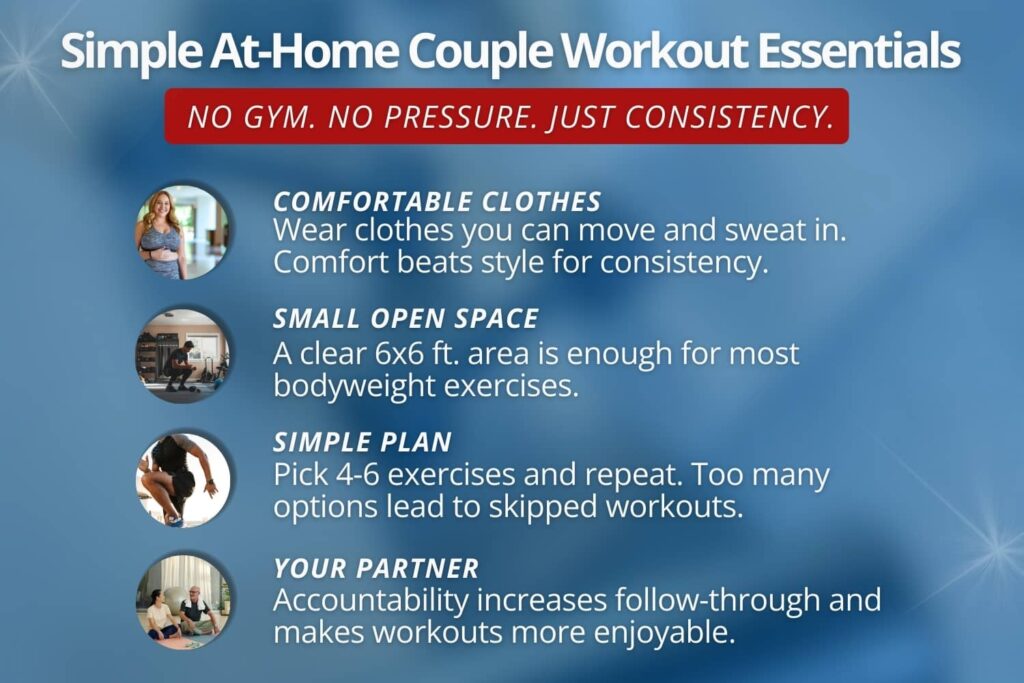
At-home workouts are one of the easiest ways to stay consistent. There is no commute, no waiting for equipment, and no added pressure.
Bodyweight Couple Workout Ideas
Bodyweight exercises are easy to scale and great for couples of different fitness levels. Try partner versions of:
- Squats
- Lunges
- Planks
- Push-ups
- Core drills
Many partner versions involve synchronized movement or mutual support, like mirror squats or alternating plank high-fives. These moves are fun and build connection while strengthening major muscle groups.
Minimal Equipment Couple Workouts
Light equipment like resistance bands, dumbbells, or kettlebells adds variety without complexity. You can use partner resistance work as part of at-home routines to target not just strength but also coordination and balance.
How Long an At-Home Couple Workout Should Be
Most couples do well with workouts that last 20 to 30 minutes. Focus on:
- Warm-ups
- 4–6 main exercises
- Brief cooldowns
Including activities like the 15-minute partner workouts can make fitness feel achievable even on the busiest days.
Gym-Based Couple Workout Ideas That Don’t Feel Intimidating
The gym offers equipment and space if both partners enjoy that environment.
Partner Circuits and Alternating Sets
Partner circuits, where one person works while the other rests or spots, are efficient and engaging. These routines help you support each other while keeping a shared pace.
Sharing Warm-Ups and Cooldowns
You do not need identical programs. Many couples share warm-ups and slow-paced cardio to start, then shrink down into partner strength work or mobility.
This keeps the session social without forcing identical performance levels.
Avoiding Common Gym Discomforts
Crowded spaces and different confidence levels can feel intimidating. Structured plans like the push and pull split found in couple workout programs help keep workouts focused without stress.
How to Adjust a Couple Workout for Different Fitness Levels
Different fitness levels are common and easy to work around.
Scaling Without Slowing Each Other Down
You can adjust:
- Weight
- Reps
- Tempo
- Range of motion
Both partners can do the same exercise while training at different intensities.
Preventing Injury and Burnout
Beginners often push too hard. Focusing on form, recovery, and balanced load reduces injury risk. Personalized coaching helps ensure workouts are effective for both partners.
How Often Should Couples Work Out Together
Most couples find success training together two to three times per week. This builds consistency without overwhelming schedules.
Individual workouts still matter. Balancing shared workouts with personal training sessions supports recovery and long-term progress.
Common Couple Workout Mistakes and How to Avoid Them
Even motivated couples can make mistakes.
- Treating workouts like a competition
- Skipping structure or a clear plan
- Ignoring rest and recovery
Structured plans and expert guidance help couples avoid burnout and stay consistent.
How Coaching Helps Couples Stay Consistent Long Term
Motivation fades. Structure lasts.
Coaching provides accountability, personalized programming for two different bodies, and progress tracking. At Mile High Fitness & Wellness, coaching prioritizes sustainable habits, realistic goals, and long-term wellness for both partners.
Related Questions
Can couple workouts help with weight loss goals?
Yes, couple workouts can support weight loss goals when combined with consistent training and balanced nutrition. When couples align their fitness schedules with nutrition support that includes meal planning and healthy eating patterns, sustainable weight loss becomes more achievable over time.
What type of coaching do beginners need for couple workouts?
Beginners benefit from personal fitness coaching that focuses on proper form, realistic progression, and individualized programming for two different fitness levels.
Simple postpartum exercise programs demonstrate how personalized guidance makes fitness accessible for people at any stage, including those returning to movement after major life changes.
How do couples maintain motivation for long-term fitness?
Couples maintain motivation through structured routines, shared accountability, and sustainable habits rather than relying on intensity alone. Creating consistent schedules that fit into daily life reduces stress and prevents burnout.
Conclusion
The most effective couple workout is not the most intense. It is the one you can show up for consistently. When workouts are simple, flexible, and realistic, they are easier to maintain and more likely to become part of your routine rather than something you eventually drop.
If you want guidance building a couple workout that fit your schedule and goals, Mile High Fitness & Wellness offers personalized coaching designed to support both partners. With the right structure and support, consistency becomes easier and long-term results become more achievable.