

There was a time when a stocked kitchen, branded merchandise, or company happy hour signaled a progressive workplace. Today, those same offerings barely make a difference.
Leaders are discovering that attraction and retention cannot be sustained through novelty. Employees are no longer evaluating workplaces based on surface-level amenities. They are evaluating whether their work is sustainable, meaningful, and supported by leadership.
Modern employee engagement ideas must strengthen the biological and psychological foundations of performance. Without that foundation, perks become temporary distractions rather than long-term solutions.
The Illusion of Perks as Culture
Perks are not inherently ineffective. They can reinforce appreciation and build connection. The issue arises when they are mistaken for strategy.
Short-term rewards activate brief spikes in positive emotion. However, sustained engagement depends on purpose, autonomy, growth, and well-being. Meaningful work and trust in leadership remain central to driving employee engagement.
At the same time, workplace stress and burnout remain widespread. Poor mental health significantly reduces productivity and increases absenteeism.
When perks are layered on top of high stress, unclear expectations, and limited growth opportunities, they feel disconnected from employees’ daily reality.
True strategy requires addressing what makes work sustainable and energizing.
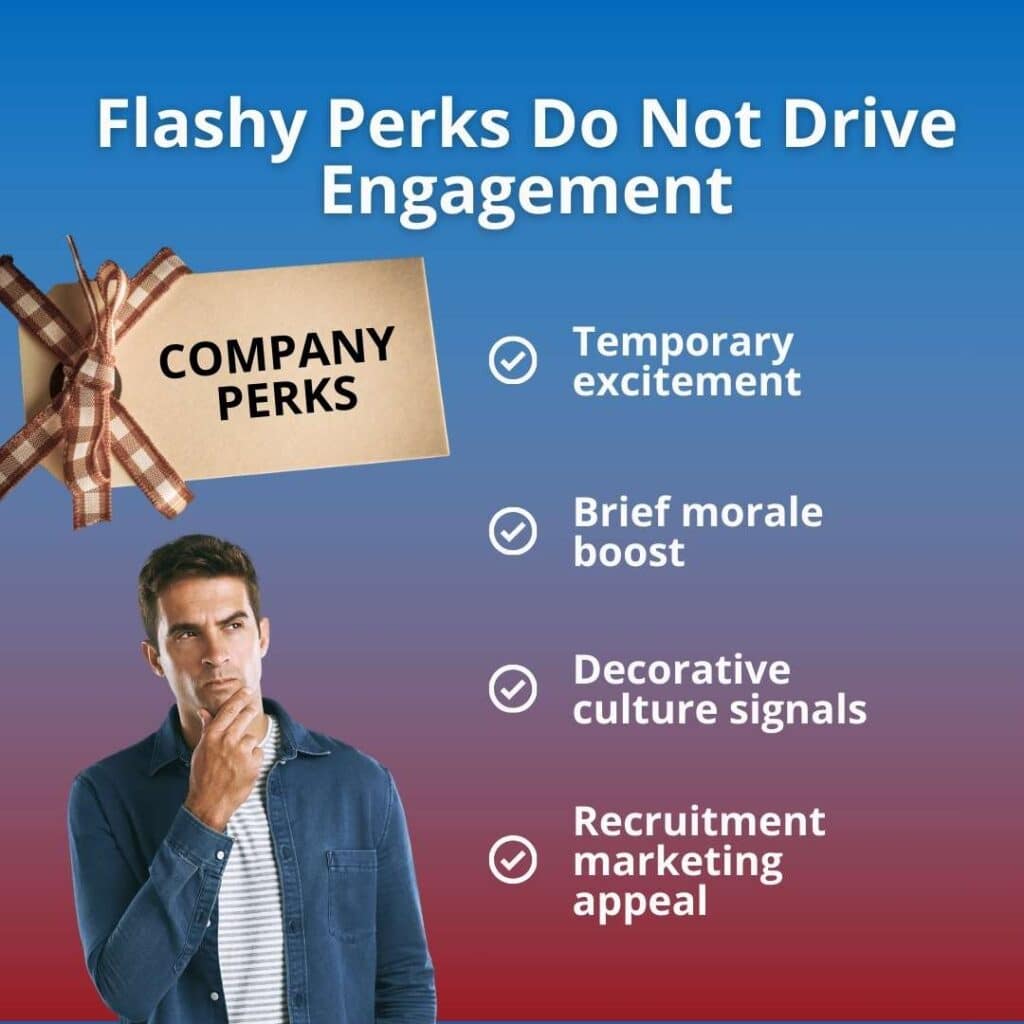
Moving Beyond Temporary Satisfaction
While employees certainly appreciate office perks, workplace experts increasingly note that these offerings provide temporary satisfaction rather than lasting fulfillment.
According to research from MetLife, over half of employers recognize that benefits will become even more critical for retention in the coming years. Yet, a gap remains where many still rely on nonessential social events rather than comprehensive wellness support.
The challenge lies in the fact that a game room does not reduce the physiological stress of a high-pressure role. To drive real engagement, benefits must enable meaningful work and reduce the friction of the daily experience.
This is the difference between a perk and a resource. Resources, such as those advocated by the American Council on Exercise, empower employees to maintain their physical health, which in turn fuels their cognitive capacity.
Employee Engagement Ideas That Create Lasting Impact
Focusing on “Whole-Person Wellness” marks a shift from traditional corporate perks to a more profound, human-centric strategy.
By addressing the mental, physical, and emotional facets of an employee’s life, you aren’t just improving their workday; you’re improving their quality of life.
1) Whole-Person Wellness Integration
Modern engagement strategies must integrate physical, mental, and professional development support.
Supervised exercise programs improve adherence and long-term health outcomes. Structured wellness initiatives reduce stress, increase energy, and enhance cognitive clarity.
Mile High Fitness and Wellness builds engagement through individualized assessments, structured programming, and measurable progress tracking. Rather than offering generic access, the focus is on guided progression and accountability.
When wellness becomes integrated into organizational culture, it transitions from a perk to a performance system.
2) Flexibility as a Retention Strategy
Flexibility is no longer optional. It is foundational to retention and engagement.
Flexible scheduling, remote work options, and realistic workload management contribute to sustained performance. However, flexibility must be paired with supportive management practices and clear expectations.
Flexibility without structure creates confusion. Flexibility reinforced by leadership builds trust.
3) Cardiovascular Health and Energy Performance
Physical resilience directly influences workplace performance. Cardiorespiratory fitness is a strong predictor of longevity and vitality. Structured aerobic and strength training remain foundational to long-term health.
Incorporating cardiovascular benchmarking into corporate wellness programs provides tangible progress markers and measurable goals.
VO2 Max Classification Reference
| Fitness Level | Men ml/kg/min | Women ml/kg/min | Health Interpretation |
|---|---|---|---|
| Excellent | 55+ | 49+ | Strong endurance and low risk |
| Good | 45 to 54 | 38 to 48 | Above average cardiovascular health |
| Average | 35 to 44 | 31 to 37 | Moderate conditioning |
| Below Average | 25 to 34 | 24 to 30 | Elevated risk indicators |
| Low | Under 25 | Under 24 | High cardiovascular concern |
Tracking improvements in these metrics fosters intrinsic motivation and measurable achievement rather than temporary excitement.
4) Nutrition and Cognitive Performance
Nutrition plays a pivotal role here. The Mayo Clinic emphasizes that consistent energy levels are a byproduct of nutrient density.
Offices that provide high-sugar snacks may be inadvertently causing brain fog and energy crashes, leading to a transactional culture where employees are physically present but mentally depleted.
Nutrient Density Comparison
| Food Type | Calories per 100g | Micronutrient Density | Satiety Impact |
|---|---|---|---|
| Leafy Greens | 20 to 30 | High | Moderate |
| Lean Protein | 120 to 165 | High | High |
| Whole Grains | 110 to 130 | Moderate | Moderate |
| Refined Snacks | 400 to 500 | Low | Low |
| Sugary Beverages | 40 per 100ml | Minimal | Low |
Practical nutrition education reduces energy crashes and supports sustained cognitive performance throughout the workday.
5) Leadership Practices That Reinforce Engagement
Perks cannot compensate for weak leadership alignment.
Employees evaluate whether leaders model healthy boundaries, encourage growth, and recognize contributions. Leadership behavior defines workplace culture more than amenities ever will.
When leaders participate in wellness initiatives, respect flexibility boundaries, and prioritize development conversations, engagement becomes embedded in daily operational practice.
Personalization as the New Standard for Retention
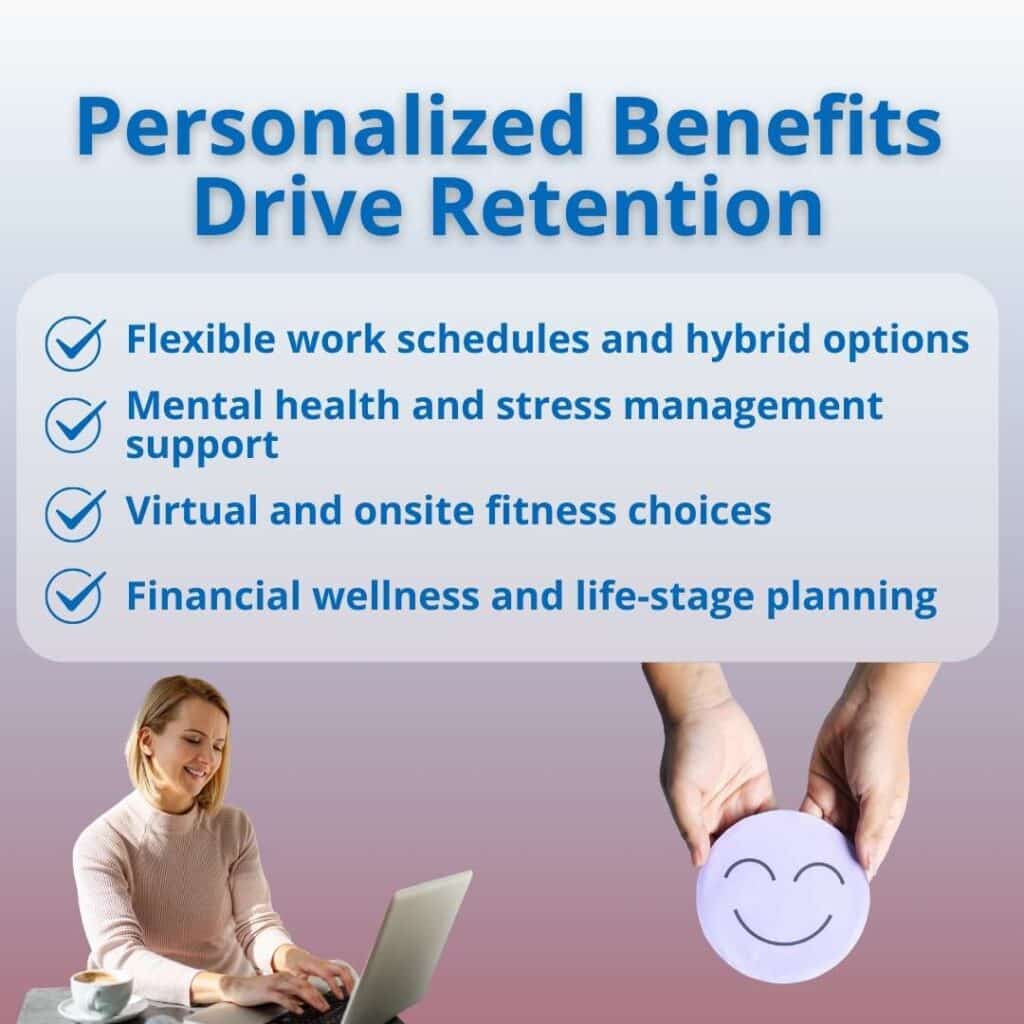
The era of one-size-fits-all benefits is over. Today’s employees seek flexibility and personalization that reflect their specific life stages. Whether it is supporting a caregiver or providing mental health resources, the goal is to make work sustainable.
The National Institutes of Health has documented how personalized wellness interventions significantly reduce the incidence of chronic stress.
When an organization offers benefits that meet an individual’s unique needs, such as virtual fitness options or financial wellness coaching, it is reinforcing a culture of respect and purpose. This shift from “impressing” employees to “supporting” them is the hallmark of a sophisticated engagement strategy.
The Infrastructure of Mental Resilience
Culture is no longer defined by the extras found in a breakroom; it is defined by the day-to-day experience of the professional.
This includes the sense of connection, the quality of leadership, and the psychological safety to innovate. According to PubMed, mental resilience is a measurable outcome of a supportive work environment.
If an organization fails to adapt, the consequences manifest as emotional disconnection. Employees may stay on the payroll, but their discretionary effort and creative output vanish.
Organizations must look to established health authorities like Harvard Health to understand how to build environments that naturally lower cortisol and foster a sense of belonging.
Measuring Vitality Through Physical Benchmarks
A data-driven approach to wellness allows leaders to move away from “fun” as a metric and toward “health” as a metric.
One such scientific benchmark is VO2 Max, which indicates the maximum oxygen uptake and overall cardiovascular health of an individual. While it is a technical measurement, it serves as a metaphor for the capacity of the workforce.
VO2 Max Standards for General Wellness
| Age Group | Fair | Good | Superior |
| 20 to 29 | 36 to 39 | 44 to 48 | 49+ |
| 30 to 39 | 34 to 36 | 41 to 45 | 46+ |
| 40 to 49 | 32 to 34 | 39 to 43 | 44+ |
| 50 to 59 | 29 to 31 | 36 to 40 | 41+ |
By referencing standards from the Cooper Institute, companies can design activity-based employee engagement ideas that actually improve the physical health of the human professional, rather than just providing a temporary distraction.
The Risk of Standing Still
Organizations that fail to evolve their benefit strategies often experience a measurable decline in engagement, retention, and performance.
Employees may remain physically present while becoming emotionally disengaged. Over time, discretionary effort decreases, and innovation slows.
Future-focused engagement will be defined by:
- Personalized benefits aligned with life stages
- Flexible work structures supported by leadership clarity
- Integrated wellness systems rather than isolated perks
- Continuous development opportunities
Employers who recognize this shift strengthen both retention and long-term competitiveness.
Related Questions
Why are flashy perks considered “short-term boosts”?
Flashy perks address surface-level wants rather than deep-seated needs. While an employee may enjoy a game room, it does not resolve issues like burnout, poor nutrition, or sedentary-related health problems. Real fulfillment comes from work that is sustainable and supported.
How can we shift our focus to “impact” rather than “programs”?
Start by listening to the real pressures your employees face. Use surveys and feedback loops to identify whether they need more flexibility, better mental health support, or more movement during the day. Focus on the results of the benefit, not the novelty of it.
Is property health a metaphor for employee wellness?
Yes. In a professional context, “property health” refers to the maintenance and optimization of the human body and mind. If you treat your workforce as a high-value asset that requires preventative care, you ensure the longevity and productivity of your organization.
What is the role of leadership in this new benefits landscape?
Leaders must move beyond approving budgets for perks and start modeling healthy behaviors. When managers support manageable workloads and encourage the use of wellness resources, they reinforce a culture where health and productivity coexist.
Conclusion
Flashy perks may create brief excitement, but they do not sustain engagement. Organizations that build strategy around whole-person wellness, flexibility, leadership alignment, and measurable development create durable performance advantages.
If your organization is ready to implement science-backed employee engagement ideas that strengthen retention and productivity, connect with Mile High Fitness and Wellness today.