
The treadmill benefits most people want are simple: a reliable way to move more, build endurance, and stay consistent when life is busy. If you work long hours, work from home, travel often, or juggle family schedules, the treadmill can make exercise feel less like a big event and more like a normal part of the week.
Some people do best with a clear plan and a little accountability. That kind of structure can come from personal fitness coaching or from basics like nutrition support that help energy feel steadier day to day.
Why Treadmills Work Well for Busy Schedules
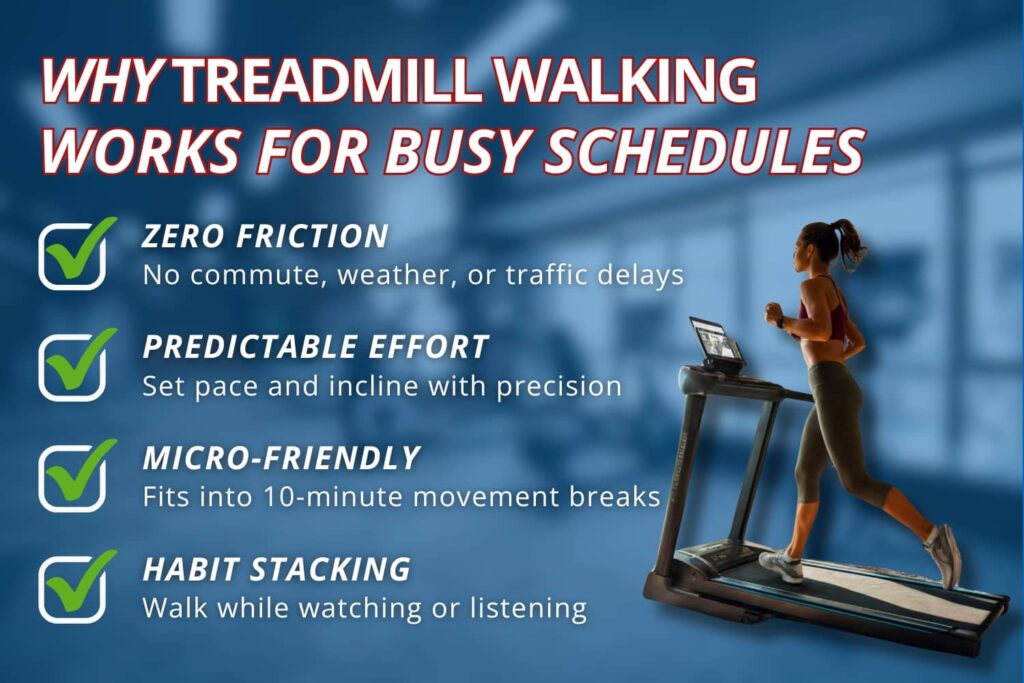
A treadmill is predictable, and predictable is powerful. When your workout setup is the same every time, it takes less mental effort to start.
That matters because most people are not short on information. They are short on time and energy. A treadmill reduces the common friction that stops workouts from happening.
- Weather is not a factor. You can walk or run without checking a forecast.
- Time planning is easier. No route, no traffic, no extra steps.
- Effort is adjustable. You can keep it easy, go steady, or add short challenges.
- Control is higher. Pace and incline stay consistent, which helps you track progress.
If your schedule changes from week to week, a flexible plan can still feel structured. The idea of building routines around real life, not ideal life, is central to online personal training for long-term health.
Treadmill Benefits for Heart Health, Endurance, and Daily Energy
When people say “cardio,” they usually mean training the heart and lungs so daily life feels easier. The treadmill supports cardio because you can stay at a steady effort long enough to build endurance.
Over time, consistent treadmill sessions often support:
- Better stamina for stairs, errands, and long workdays
- Stronger heart and lung function from regular movement
- More stable energy when workouts stay in a manageable intensity range
- Better recovery after stressful days or demanding workouts
What the Guidelines Say in Plain Language
A common target for adults is 150 minutes of moderate activity per week, plus strength training on two days. The CDC lays this out clearly in the official physical activity guidelines.
That might sound like a lot until you break it down:
- 30 minutes, 5 days per week, or
- 10 to 15 minutes at a time, stacked across your day
This is where treadmills shine. Short sessions are easy to start and easy to fit between meetings, before school pickup, or after dinner.
A balanced routine also includes strength work, which can help joints and muscles feel more supported as you increase walking or running. A clear way to think about those connected habits shows up in covering the 4 pillars of health.
Calories and Weight Goals Without Overthinking It
Calories burned depend on speed, incline, body size, and effort. It helps to treat calorie estimates as a rough guide, not a score.
If you like a reference point, the Mayo Clinic shares estimates for calories burned by exercise. A useful takeaway is that small changes (a bit more incline, a few extra minutes) can add up across the week without making workouts feel extreme.
Why Incline Walking Is One of the Most Useful Treadmill Options
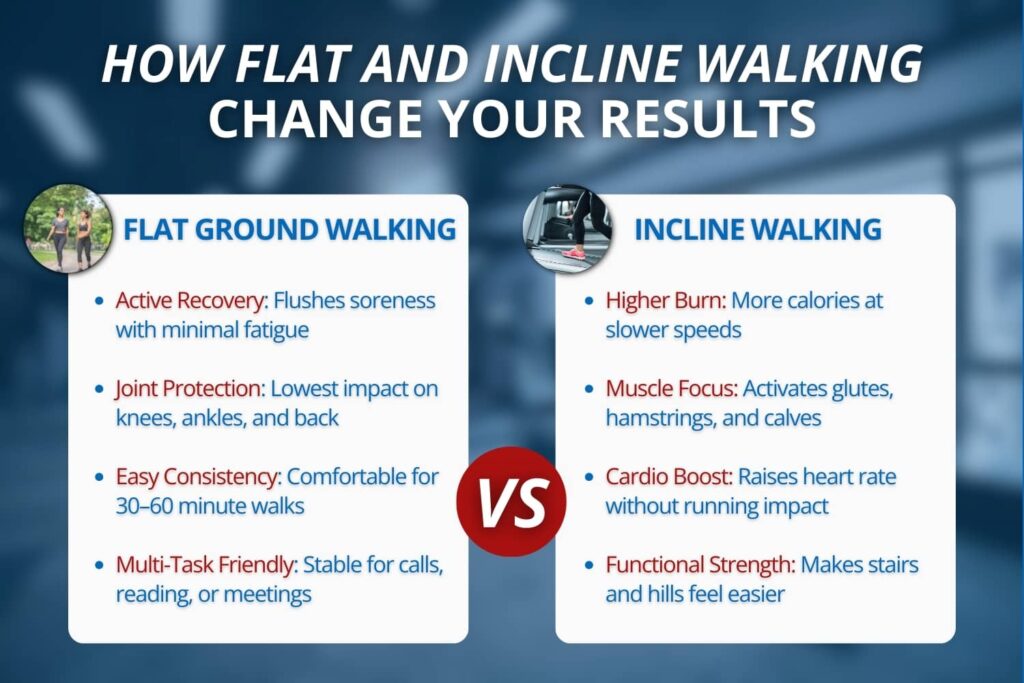
Incline walking is one of the most practical treadmill tools because it raises effort without requiring you to run. It simply means walking at a slope. Even a small incline can increase your heart rate and challenge your legs.
Incline walking works well for people who:
- Prefer a lower-impact option
- Are you rebuilding fitness after a break
- Want a workout that feels challenging but controlled
- Want more leg and glute work without complicated equipment
It also helps if your normal walking pace feels too easy, but jogging does not feel good yet. In many cases, adding incline feels better than trying to walk very fast.
A simple way to choose between options is to compare how each machine feels and what it trains best. A quick cardio machine overview can help you decide when the treadmill is the right fit.
How to Pick the Right Intensity
You do not need fancy trackers to choose the right effort level. Use the talk test:
- Moderate intensity: you can talk, but you do not want to sing.
- Hard intensity: you can say a few words, then you need a breath.
Most people do best starting in moderate intensity and adding small challenges later. That could mean a short incline bump or a short, faster interval that still feels controlled.
Treadmill Workouts That Fit Tight Schedules
One of the biggest treadmill benefits is that it works in short intervals. A 10 to 25-minute session can support your health when it is done consistently.
Here are three simple session styles that cover most needs. They are intentionally basic so you can repeat them without needing a perfect setup.
Easy Walk Sessions for Consistency
Easy walking supports weekly movement goals without draining recovery. It is also a great default option on stressful days.
A simple structure:
- 5 minutes easy warm-up
- 10 to 20 minutes of comfortable walking
- Optional: 3 to 5 minutes at a gentle incline
- 2 to 3 minutes easy cool-down
If your goal is to build the habit first, this is the session that gets you there.
Steady Sessions for Building Endurance
A steady session sits in the “working, but manageable” zone. You feel warm, you can talk, and you feel better, not crushed.
A simple structure:
- Warm up for 5 minutes easily
- 10 to 20 minutes at a steady pace
- Cool down for 3 minutes easily
Many people use this 1 to 2 times per week as their main treadmill workout.
Interval Sessions for Time Efficiency
Intervals are “different speeds on purpose.” You go a little harder briefly, then recover. This can improve fitness with less total time.
A beginner-friendly format:
- Warm up for 5 minutes easily
- 6 rounds of: 30 seconds faster, 60 to 90 seconds easy
- Cool down for 3 minutes easily
Harvard Health explains why this style can work well in its overview of interval training.
If gym equipment feels confusing, knowing common machine names can reduce the “what do I do now” feeling when you walk in. A quick skim of gym exercise machine names can make the whole space feel more approachable.
A Simple Weekly Plan That Helps You Stay Consistent
A plan works when it fits your schedule and your recovery. For many people, three treadmill days per week is a solid starting point. A fourth day can come later, once three days feel easy to maintain.
The table below gives you a few plug-and-play options. Pick the row that matches your real week right now. If you want steady progress, keep the first month simple and repeatable.
| Goal | Weekly Treadmill Plan | Why It Helps | Small Adjustment for Progress |
|---|---|---|---|
| Build the habit | 3 days, 15 to 20 minutes easy walking | Low stress, easy to repeat | Add 5 minutes to one day |
| Improve endurance | 2 steady days plus 1 longer easy day | Builds stamina gradually | Add 5 minutes every 1 to 2 weeks |
| Save time | 2 easy days plus 1 interval day | Efficient, less total time | Add 1 interval round |
| Reduce stress | 3 easy days, mostly walking | Supports recovery and mood | Add 5 minutes of gentle incline |
| Add challenge without running | 2 incline days plus 1 steady day | Raises effort with less impact | Add 1 percent incline, not speed |
Some people also like rotating treadmill days with other cardio options to keep things fresh without losing structure. A practical place to start is a simple gym cardio routine that mixes a few repeatable options.
Tips That Make Treadmill Routines Easier to Stick With
Most people do not struggle because they are lazy. They struggle because the plan is too hard to repeat. These tips focus on making treadmill workouts feel realistic.
Start Smaller Than You Think You Should
Starting at 10 to 15 minutes can feel too easy, but it is often the fastest way to rebuild consistency. Once the habit is stable, increasing time or incline is much easier.
Change One Variable at a Time
Progress is easier when you adjust only one thing:
- Add 5 minutes, or
- Add a small incline increase, or
- Add one extra interval round
This helps your body adapt without the “all or nothing” cycle.
Make the Start Simple
Reduce the steps between “I should” and “I did.”
Keep shoes and headphones in one place. Keep the treadmill area clear. Choose a playlist or show before you start. Small barriers add up when you are stressed and tired.
Support Energy With Simple Nutrition
If workouts feel harder than they should, energy dips are often part of the story. A consistent breakfast, a balanced lunch, and a planned snack can make it easier to follow through. Simple habits like that are often part of nutrition support, especially for busy workdays.
Common Treadmill Mistakes and How to Fix Them
Small form and pacing habits can change how treadmill workouts feel. These are common, and they are fixable.
1) Holding the Rails the Whole Time
Gripping the rails can change posture and reduce the work your legs and core do.
Use a light touch only when needed for balance. Aim for a tall posture, relaxed shoulders, and arms that swing naturally.
2) Going Too Hard Too Soon
Hard workouts can feel productive, but they can also lead to soreness that breaks consistency.
Build a base with moderate sessions first. Add harder intervals once your weekly routine feels steady.
3) Repeating the Same Workout Every Time
Doing the same speed and incline can lead to a plateau, which means progress slows.
Rotate three session types across the week: easy walk, steady session, and incline or intervals.
A simple plan that matches your schedule, goals, and starting point often removes the guesswork that causes stop-start training. Many people use personal fitness coaching when they want that kind of structure.
How Treadmills Fit Into Corporate Wellness and Remote Work Culture
Treadmills can support corporate wellness because walking-based movement is accessible for a wide range of fitness levels. Not everyone wants intense workouts, but many people can commit to short walks that add up.
Two practical ways treadmills fit into workplace wellness:
- Walking culture: walking breaks, step challenges, and walking meetings can feel doable for many employees.
- Consistency across locations: hotel gyms and community gyms often have treadmills, which helps travel not derail routines.
Inclusive design matters when teams have different abilities, comfort levels, and time constraints. Practical strategies for participation show up in inclusive wellness tips.
Step-based events can also work well across remote and onsite teams when the goal is steady movement, not competition. A few approachable formats are listed in the step challenge ideas.
For broader planning, programs that combine education, coaching, and flexible movement goals often scale better across departments and schedules. Many companies use corporate wellness programs as a framework instead of relying on a single short-term challenge.
Related Questions
Is a treadmill better than walking outside?
A treadmill can be easier to repeat because the pace and conditions stay consistent, which helps busy weeks feel more manageable. The same habit-building idea shows up in walking for a workout, especially when you want something simple that still counts.
What is a simple treadmill workout for beginners?
Start with an easy warm-up, a steady walk you can maintain, and a short cool-down, then add a small incline or a few minutes as it gets easier. If the gym feels overwhelming, knowing a few gym exercise machine names can make it easier to keep your plan simple.
Do treadmill intervals work if I only have 15 to 20 minutes?
Yes, short intervals can be effective when the “fast” parts stay controlled, and the recovery parts are truly easy. A repeatable gym cardio routine can help you balance interval days with easier sessions so the week stays sustainable.
Is the treadmill good for weight loss and fat loss goals?
It can be, mainly because it helps you stay consistent with weekly movement and total energy use over time. The basics behind cardiovascular exercise for fat loss are helpful if you want a clearer way to think about intensity and consistency without chasing extreme workouts.
How can companies measure progress in a wellness program that includes walking or treadmill time?
Simple tracking, like participation, consistency, and energy or stress check-ins, is often more useful than focusing only on weight changes. Practical ideas for measuring fitness training impact at work can help teams understand what is improving and what needs adjusting.
How do you make treadmill-based wellness feel inclusive for different fitness levels?
Offer options like easy walks, short sessions, and clear “choose your effort” ranges so people can participate without pressure. An inclusive corporate exercise program often works best when it includes multiple intensity levels and beginner-friendly modifications.
Conclusion
The biggest treadmill benefit is making movement predictable, which helps you stay consistent. Start with a simple plan you can repeat, then build gradually with more time, a little incline, or short intervals.
If you want help turning treadmill sessions into a full routine that fits your schedule and goals, schedule a fitness consultation through Mile High’s contact page.