A hormonal imbalance happens when your body makes too much or too little of a hormone like cortisol, estrogen, or testosterone, and it can throw off your energy, weight, mood, and sleep long before you connect the dots. At Mile High Fitness & Wellness, we hear a version of this from clients constantly: “I’m doing everything right and still feel off.” Often, hormones are part of the answer.
Here’s what typically causes hormonal imbalance, how it shows up differently in men and women, and where lifestyle changes can genuinely help.
What a Hormonal Imbalance Actually Is
Hormones are chemical messengers your endocrine glands release into your bloodstream to run things like metabolism, mood, sleep, and reproduction. When one or more of those messengers falls outside its normal range, the systems that depend on it start to misfire.
Some imbalances are temporary and tied to normal life stages, like puberty or a menstrual cycle. Others are chronic and need medical attention. Either way, “hormonal imbalance” isn’t one condition. It’s a broad label that covers dozens of different hormone-driven issues, which is part of why it’s so easy to overlook.
How Hormonal Imbalance Differs Between Men and Women
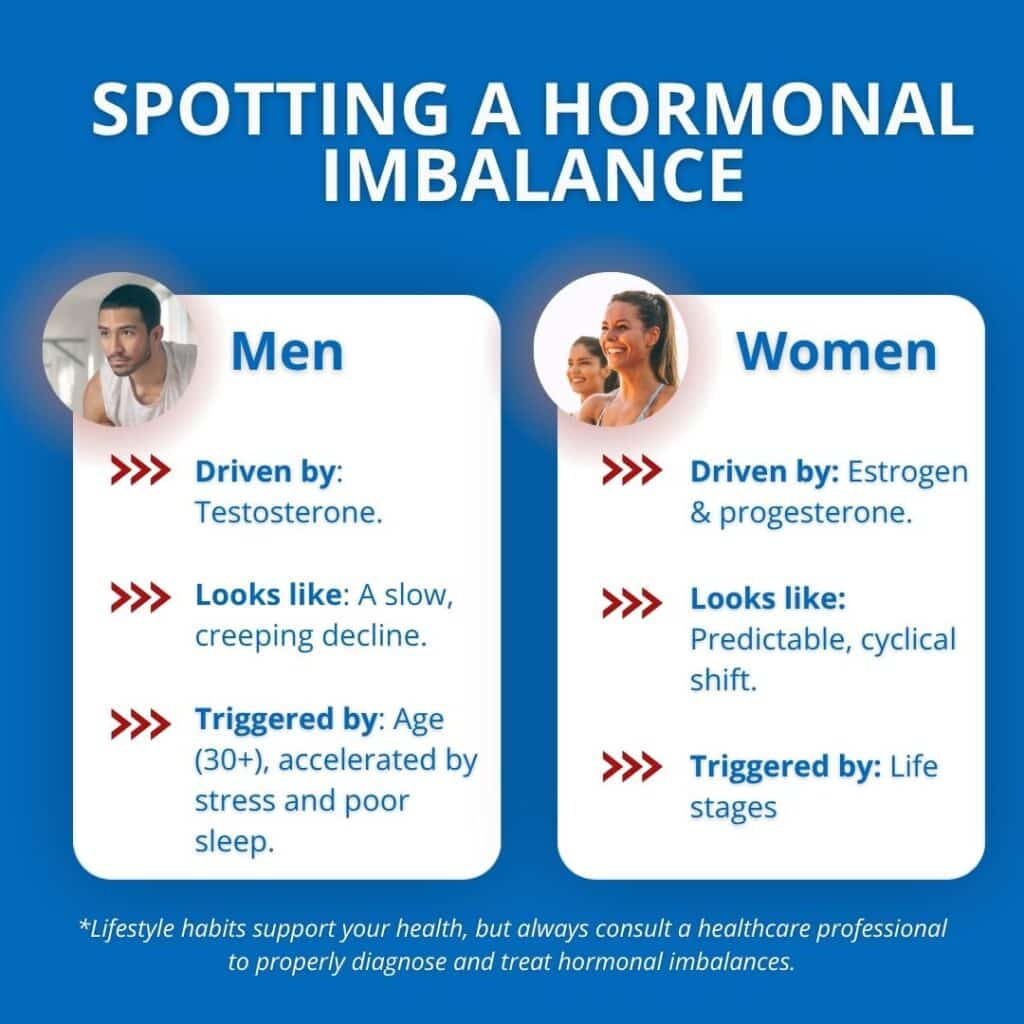
Both sexes deal with cortisol, thyroid, and insulin the same way. Where they diverge is which sex hormone tends to drive the imbalance, and how it shows up.
| Factor | Women | Men |
|---|---|---|
| Primary hormone | Estrogen and progesterone | Testosterone |
| Pattern | Cyclical, tied to a life stage | Slow, linear decline (andropause) |
| Typical trigger | Menstrual cycle, pregnancy, perimenopause/menopause | Aging (starts ~30), accelerated by obesity, stress, poor sleep |
| How symptoms show up | Predictable, often monthly: irregular periods, mood shifts, hot flashes | Gradual: dropping energy, muscle mass, and libido with no obvious pattern |
That last row is the practical takeaway: a predictable, monthly pattern points toward the estrogen-progesterone side, more common in women.
A slow, creeping decline with no clear rhythm points toward testosterone, the more common story in men. Bloodwork is what actually confirms which one you’re dealing with, not the pattern alone.
The Most Common Causes of Hormonal Imbalance
There’s rarely a single cause. Most people dealing with a hormonal imbalance have two or three of these overlapping at once.
Aging (Menopause, Perimenopause & Andropause)
Hormone production naturally shifts with age. Women typically see estrogen and progesterone drop during perimenopause and menopause, which can bring on hot flashes, sleep trouble, and mood changes. Men go through a slower, less-talked-about version called andropause, where testosterone declines by roughly 1% a year starting around age 30. Neither is a malfunction. Both can still come with symptoms worth managing.
Chronic Stress and Cortisol
Cortisol is your body’s stress hormone, and it’s supposed to spike and then settle back down. When stress is constant instead of occasional, cortisol stays elevated, and that excess cortisol can suppress testosterone production and disrupt other hormones your body needs to regulate appetite, sleep, and blood sugar.
Diet and Blood Sugar
Diets heavy in processed food and added sugar drive blood sugar swings that force your pancreas to overproduce insulin. Over time, that pattern can contribute to insulin resistance, which is itself a hormonal imbalance and a risk factor for others. Nutrient gaps (low zinc, magnesium, or vitamin D, in particular) can also limit your body’s ability to produce hormones efficiently.
Sleep and Activity Levels
Hormone production largely happens while you sleep, so chronically short or poor-quality sleep limits it directly. Activity level matters too, but in both directions: a sedentary lifestyle is linked to lower testosterone, while overtraining without enough recovery can spike cortisol and suppress testosterone at the same time.
Testosterone: Why It’s Getting So Much Attention Right Now
Testosterone has become one of the most searched hormone topics in health and fitness circles, and for good reason. It affects muscle mass, energy, libido, and mood in men, and it plays a smaller but real role in women’s hormone balance too. The natural decline that comes with age is normal, but obesity, chronic stress, poor sleep, and a sedentary routine can all accelerate it well beyond what aging alone would cause.
That’s also why testosterone is one of the more lifestyle-responsive hormones.
Weight management, resistance training, stress reduction, and sleep consistency can meaningfully support healthy levels, alongside whatever a doctor recommends after testing.
Signs Your Hormones Might Be Out of Balance
Symptoms vary depending on which hormone is affected, but the most common ones include:
- Persistent fatigue that doesn’t improve with rest
- Unexplained weight gain or difficulty losing weight
- Mood swings, irritability, or new anxiety
- Sleep disruption
- Changes in libido
- Irregular periods (for women) or reduced muscle mass and energy (for men)
- Skin changes, including acne or dryness
One or two of these on their own usually isn’t cause for alarm. Several together, especially if they’re new or getting worse, are worth bringing up with a doctor.
What You Can Do About It
Lifestyle changes won’t resolve every hormonal imbalance; some genuinely require medical treatment, but they move the needle on the ones driven by stress, diet, sleep, and activity level:
- Prioritize protein, fiber, and healthy fats at meals to stabilize blood sugar and support hormone production.
- Build in real recovery, not just rest days on paper. Overtraining and undertraining both work against your hormones.
- Protect your sleep window. Consistent sleep and wake times matter more than total hours alone.
- Manage stress actively. Even 10 minutes of daily movement, breathwork, or a chair massage break lowers cortisol measurably.
- Strength train regularly. Resistance training is one of the most consistently supported lifestyle levers for healthy testosterone levels in both men and women.
This is exactly where a structured nutrition and fitness plan earns its keep. Our nutrition support team builds meal and habit plans around blood sugar stability and recovery, and pairs with personal training to build the strength-training habit that supports hormone health long-term.

Related Questions to Explore
- What are the signs of a hormonal imbalance? The most common signs are fatigue, unexplained weight changes, mood swings, sleep trouble, low libido, and, for women, irregular periods. Symptoms vary by which hormone is affected.
- Can a hormonal imbalance cause weight gain? Yes. Hypothyroidism, insulin resistance, and declining estrogen or testosterone can all slow metabolism or change how your body stores fat, making weight gain harder to manage even with no change in habits.
- Does stress actually cause hormonal imbalance? Chronic stress keeps cortisol elevated, and sustained high cortisol can suppress testosterone and disrupt the hormones that regulate appetite and sleep. Occasional stress isn’t the issue; ongoing, unmanaged stress is.
- Can diet and exercise fix a hormonal imbalance? For imbalances tied to lifestyle, like insulin resistance, cortisol elevation, or age-related testosterone decline, diet, sleep, and strength training can meaningfully improve symptoms. Imbalances caused by thyroid disease or other medical conditions need treatment beyond lifestyle changes.
- What is andropause? Andropause is the gradual, age-related decline in testosterone that men experience starting around age 30, roughly 1% per year. It’s the male counterpart to perimenopause, though usually more gradual.
- How is a hormonal imbalance diagnosed? A doctor typically starts with a blood test to measure hormone levels (like testosterone, thyroid hormones, or cortisol) alongside a review of symptoms and health history before recommending treatment.
- Do men and women experience hormonal imbalance differently? Yes. Women’s imbalances more often center on the estrogen-progesterone cycle and are tied to a life stage. Men’s imbalances center more on testosterone and tend to build gradually with age. Stress, diet, and sleep affect both sexes in similar ways.
When to Call a Professional
Lifestyle changes go a long way for hormone imbalances rooted in stress, diet, sleep, and activity, but they’re not a substitute for medical care. See a doctor if symptoms have lasted more than four to six weeks, are getting worse, or are affecting your daily life.
This is especially true for symptoms tied to thyroid conditions, PCOS, or significant testosterone decline, which usually need bloodwork and a treatment plan a coach can’t provide.
Where our team fits in is the lifestyle layer underneath that medical care. Our coaches work alongside your doctor’s recommendations, not instead of them, building the nutrition and training habits that support whatever treatment plan you’re on.
Conclusion
Hormonal imbalance usually isn’t one thing. It’s aging, stress, diet, sleep, and activity level overlapping, with testosterone getting a lot of the current spotlight. A few takeaways:
- Most hormone-related fatigue, weight change, and mood shifts trace back to a handful of overlapping, often lifestyle-responsive causes.
- Diet, sleep, stress management, and strength training are the levers you control while you sort out the rest with a doctor.
- Persistent or worsening symptoms deserve a bloodwork-based conversation with a physician, not just a new supplement.
If you want a nutrition and training plan built around supporting your hormones, reach out to our team, and we’ll help you build one.