
A human resources manager who wants a wellness program employees actually use needs three things right from the start: real budget authority, a design employees helped shape, and a way to measure whether it’s working. Get those in place, and wellness stops being a line item nobody uses.
Here’s how HR managers we work with approach it, where a lot of programs quietly go wrong, and why HR’s own wellbeing deserves the same attention.
Why Wellness Belongs on the HR Manager’s Desk
Wellness has moved from a nice-to-have perk to a retention and productivity lever, and that puts it squarely in HR’s lane. HR managers already own compensation, benefits, and the employee experience, and a well-run wellness program touches all three: it lowers health costs over time, reduces absenteeism, and signals to employees that the company is invested in more than their output.
That’s also why wellness programs that get built without HR at the table, dropped in by leadership as a mandate, tend to underperform. HR is the department that knows what employees will actually use.
Owning a Wellness Program
Here is a closer look at what a human resources manager owns as it relates to corporate wellness programs.
Budget and Vendor Selection
HR managers typically control (or heavily influence) the wellness budget, which means choosing between building a program internally or bringing in a partner who already has trainers, nutrition coaches, and program infrastructure in place.
Vendor selection comes down to a few practical questions:
- Can they serve your team size?
- Do they offer both in-person and virtual options if you have remote staff?
- Can they report on participation, not just attendance?
Program Design and Employee Buy-In
The programs that get used are the ones employees had a hand in shaping. That can be as simple as a short survey asking what people actually want (fitness classes, nutrition coaching, stress management, massage) instead of assuming.
Offering a menu of options rather than one mandatory activity also matters. Not everyone wants a step challenge, and not everyone wants a yoga class. A program with 15-20 activity options and employee choice consistently outperforms a single mandated activity.
Measuring What’s Working
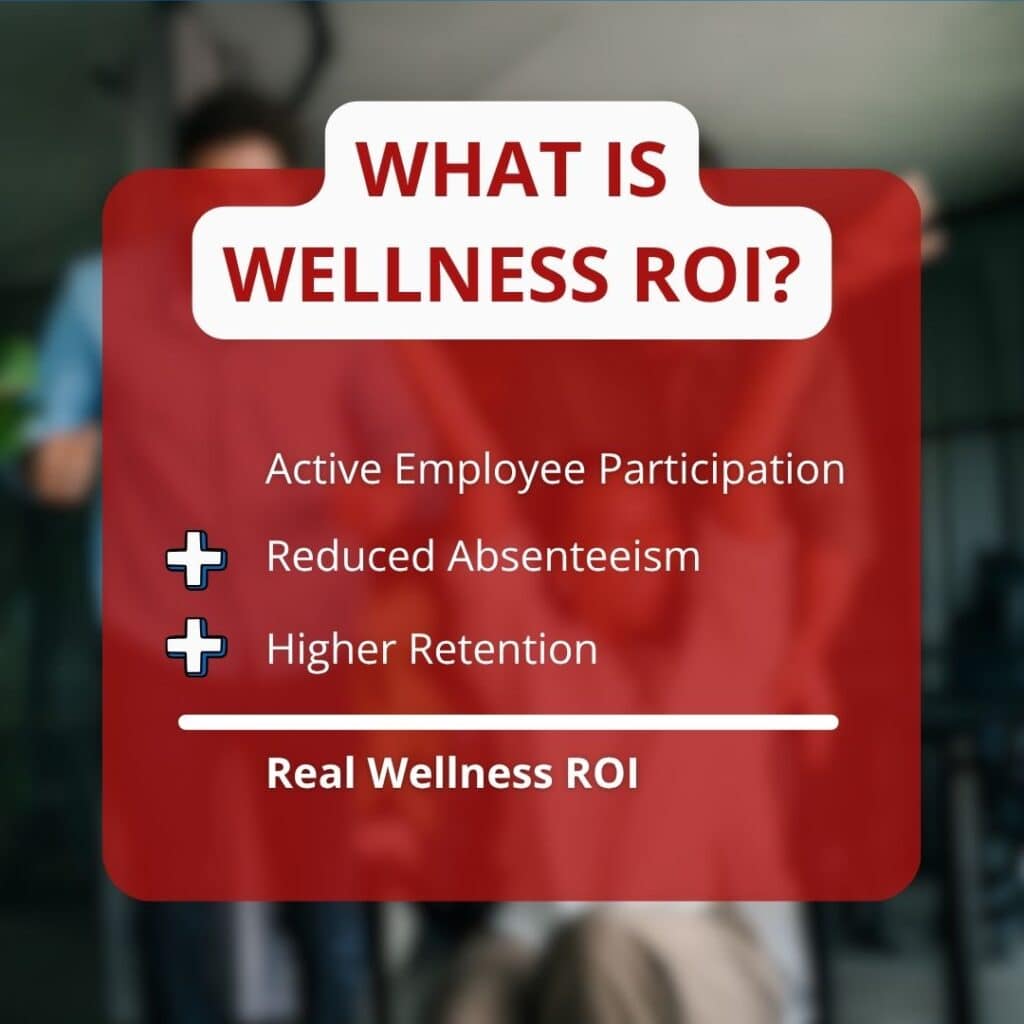
Wellness ROI is a real question boards and finance teams ask, and it’s one HR needs a real answer for. Participation rate, not just enrollment, is the number that matters. A program with 90% enrollment and 20% ongoing participation is not a working program. Track engagement over time, not just at kickoff, and be ready to cut or replace activities nobody’s using.
Building a Wellness Program Employees Actually Use
A practical build sequence that holds up across company sizes:
- Survey before you design. Ask what employees want before choosing vendors or activities.
- Offer variety, not a mandate. Fitness, nutrition, stress management, and financial wellness cover different needs; most companies need more than one.
- Make it easy to access. A digital portal or simple sign-up process removes the biggest barrier to participation: friction.
- Communicate consistently, not just at launch. Monthly reminders outperform a single announcement email.
- Review participation quarterly and be willing to swap out activities that aren’t landing.
This is the exact gap our corporate wellness programs are built to close: certified coaches, a tracked digital portal, and a menu of 20+ activities so HR isn’t building this from scratch. If burnout is part of what’s driving the need for a program, we’ve written specifically about that here, and if you’re also weighing financial wellness benefits, this piece on employee financial wellness trends is a useful companion read.
Common Mistakes HR Managers Make with Wellness Programs
- Choosing one activity for everyone. A single mandatory fitness challenge alienates employees who wanted nutrition coaching or stress support instead.
- Launching without a way to measure participation. If you can’t see who’s actually using it, you can’t defend the budget next year.
- Treating it as a one-time initiative. Wellness programs that get communicated once and never mentioned again quietly die by month three.
- Skipping the employee survey. Assuming what people want instead of asking is the single most common reason programs underperform.
Who Takes Care of the HR Manager?
HR managers spend their days absorbing everyone else’s stress: the layoff conversation, the benefits complaint, the conflict between two employees who won’t speak directly to each other. It’s emotionally taxing work, and it’s also work HR managers rarely build wellness support for themselves.
SHRM’s own research has found that roughly three-quarters of HR professionals describe their job as “emotionally exhausting,” with nearly half reporting burnout, which tracks.
Human Resource managers are doing the emotional labor of the whole company with none of the same programs built for them.
A few things actually help, and none of them require a big program:
- Use the benefits you administer. HR managers are often the last people in the building to book the massage therapy, EAP counseling session, or nutrition consult they set up for everyone else. If it’s good enough to offer the team, it’s good enough to use.
- Protect real breaks, not just calendar gaps. A 10-20 minute mid-day reset, a walk, a chair massage, a few minutes away from Slack, does more for HR-specific stress than an extra hour of PTO banked for later.
- Set a boundary on being “on” for everyone. HR is the department people come to with problems all day. Without a boundary, that adds up to a second, invisible job.
- Bring in outside support for the emotional load, whether that’s a therapist, a coach, or simply a peer HR network outside your own company where you can talk shop without it being a performance review.
If your company already has corporate wellness programs or professional massage therapy in place, that’s not just a perk for the rest of the team. It’s already paid for and available to you too.

Related Questions to Explore
- What does a human resources manager do in a company? An HR manager oversees hiring, compensation and benefits, employee relations, compliance, and, increasingly, employee wellness programs. Responsibilities vary by company size, but wellness has become a standard part of the role.
- How does HR support employee wellbeing? HR supports wellbeing through benefits design (health insurance, mental health resources), wellness programs (fitness, nutrition, stress management), and policies like flexible work arrangements that reduce burnout risk.
- How much should a company budget for a wellness program? Budgets vary widely by company size and program scope, from a few activities and a modest stipend to a full-service program with dedicated coaches. The better question for most HR managers is participation-per-dollar, not a fixed target.
- What makes an employee wellness program successful? Programs succeed when employees help choose the activities, participation is tracked (not just enrollment), and the program is communicated consistently rather than launched once and forgotten.
- Should HR build a wellness program in-house or bring in a vendor? It depends on internal bandwidth. Building in-house works for companies with dedicated wellness staff; most mid-size companies get more mileage from a vendor who already has coaches, programming, and a tracking portal in place.
- Who takes care of the HR manager’s own wellbeing? Often, no one, unless the HR manager builds it in themselves. Using the same benefits and wellness programs they administer for employees, protecting real breaks, and setting boundaries on being emotionally available all day are practical starting points. Outside support helps with the emotional load specifically.
When to Call a Professional
HR managers can design the strategy, but running fitness classes, nutrition coaching, and massage therapy across a team of any size is a full-time operational job on top of everything else HR already owns. That’s the point where bringing in a dedicated wellness partner, rather than building and staffing it internally, usually makes more sense.
Look for a partner who can serve your team size, offers both in-person and virtual options, and can actually report on participation so you have something to show leadership.
Conclusion
Wellness works when HR treats it like any other program they own: budgeted deliberately, designed with employee input, and measured honestly.
- Employee input and variety in program design consistently beat a single mandated activity.
- Participation, not enrollment, is the number that proves ROI.
- The wellness benefits you build for your team are available to you too, and most HR managers never use them.
If you’re building or rethinking a wellness program for your team, reach out to our corporate wellness team about what a tracked, employee-driven program could look like at your company.